Driving inTenerifeMotorways, hairpins, and the rules that catch people out
The short version
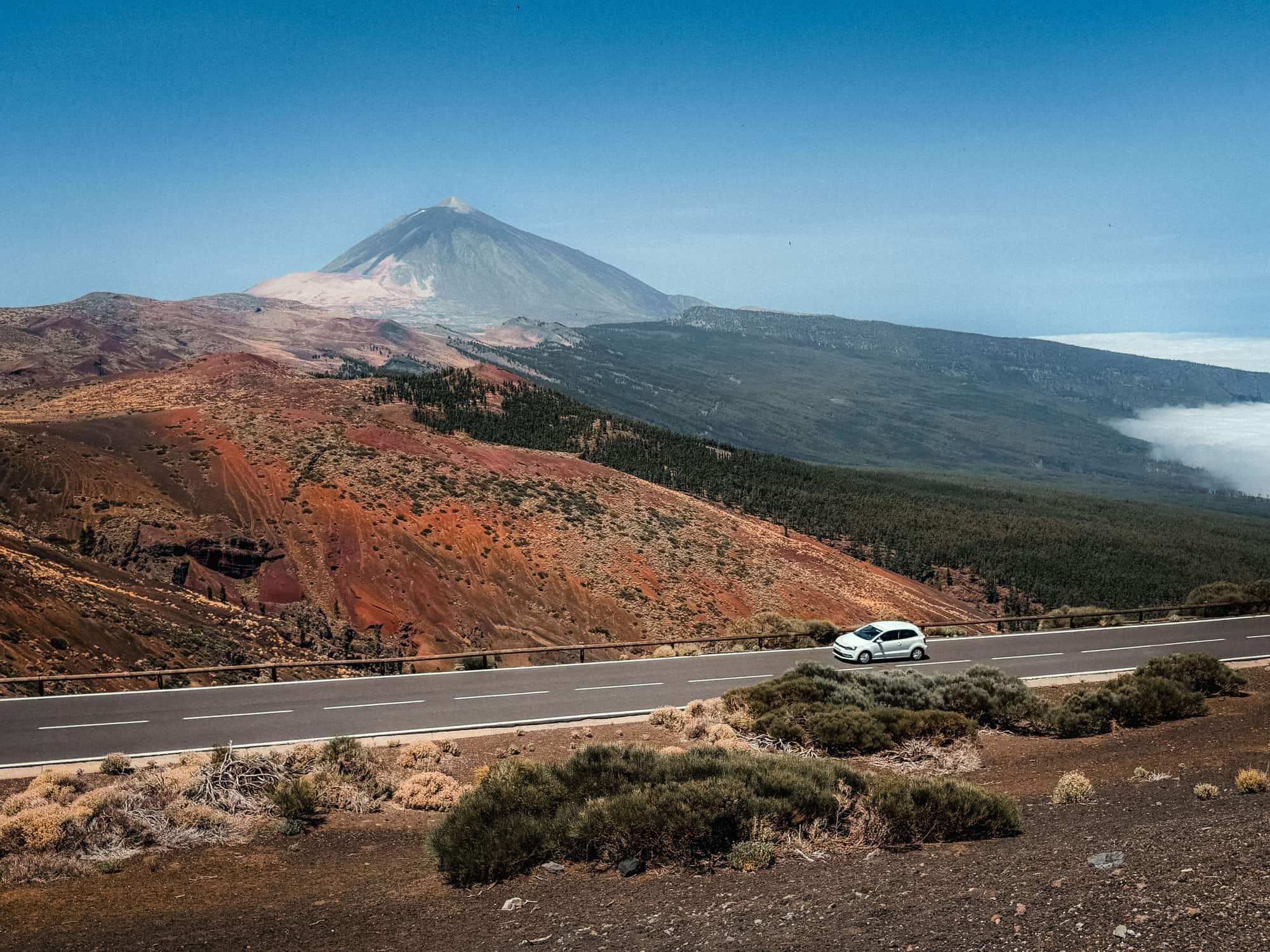
Where you can collect →Tenerife is an easy island to drive a rental car on, and a hard one to judge from a map. Two motorways do most of the work, they are free, and they are better than anything the distances suggest. What the map hides is the vertical: this is a volcano with a coastline around it, so twenty kilometres inland can mean two thousand metres up, an hour of hairpins and a different climate at the top. Plan by time rather than by distance and nothing here will surprise you. Almost every week here starts with car hire at Tenerife airport, because that is where the flights land and where the list is deepest.
The second thing worth knowing before you set off is that nothing here is far. The island is about eighty kilometres across at its widest and the motorways cover most of that, so the longest journey anyone normally makes, one coast to the other, is under an hour and a half. What eats time is the last twenty minutes of almost every good drive, where the road stops being a motorway and starts being a mountain. None of it needs an expensive car, whether it comes from cheap car hire at Tenerife North Airport or from the south.
The roads, in three kinds
Find a car for these roads →01 The motorways, TF-1 and TF-5
The TF-1 runs from Santa Cruz down the east coast, past the southern airport and along the resorts to Santiago del Teide. The TF-5 runs north from the capital to Puerto de la Cruz and on to Icod. Both are free, well surfaced, and busy at commuting times around Santa Cruz. Nearly every long journey on this island is mostly motorway with a short interesting part at the end.
02 The climbs
The TF-21 to the crater and the TF-24 along the ridge are wide, sealed and full of switchbacks. They are not technical driving, but they are long: allow an hour from the coast, and expect a small car to work hard. Coming down, use a low gear rather than the brakes.
03 The old roads
Masca, the Teno roads and parts of the Anaga are single track with passing places, stone walls and no barrier on the drop side. Ordinary hire cars drive them daily. Go slowly, pull in early, and accept that a bus coming the other way means reversing.
The rules, in the order they matter
Collecting at the airport →01 Right-hand side, Spanish limits
120 on the motorway, 90 on main roads, 50 in towns and 30 on single-lane urban streets. The limits change quickly on the climbs, where a 90 stretch becomes 50 through a village without much warning, and the villages are where the cameras are.
02 The V-16 beacon has replaced triangles
Since the first of January 2026, Spanish-registered vehicles carry a connected V-16 beacon instead of warning triangles, and every hire car on this island is Spanish-registered. It is a small orange light that goes on the roof and reports your position, so you signal a breakdown without walking up the hard shoulder. Check it is in the car when you collect it.
03 Blue lines, white lines, yellow lines
Blue is a paid bay with a meter and a time limit, white is free, yellow is no parking. That is the whole system, and it is the same in Santa Cruz as it is in Los Cristianos. Fines and parking tickets are the driver's, and they reach you afterwards through the supplier.
04 Alcohol, phones and children
Spanish limits are lower than the ones British drivers are used to and lower still for drivers in their first two years, so the sane holiday rule is nothing at all before driving. Handheld phones are out, headphones are out, and children under 135 centimetres need an appropriate restraint, which is worth booking with the car rather than hoping.
05 No tolls, anywhere
Both motorways are free and there is no toll road on the island, so there is nothing to pay at the roadside and no transponder to worry about. The only money the road can cost you is a fine or a parking ticket.
The car makes the island
All pickup pointsPrice a car for your own dates and pickup point, with the deposit and the cover shown on every one of them before you commit; the fuel goes back at the level it came out at, whichever car you pick.
The cloud, and why the weather app lies
Teide by car →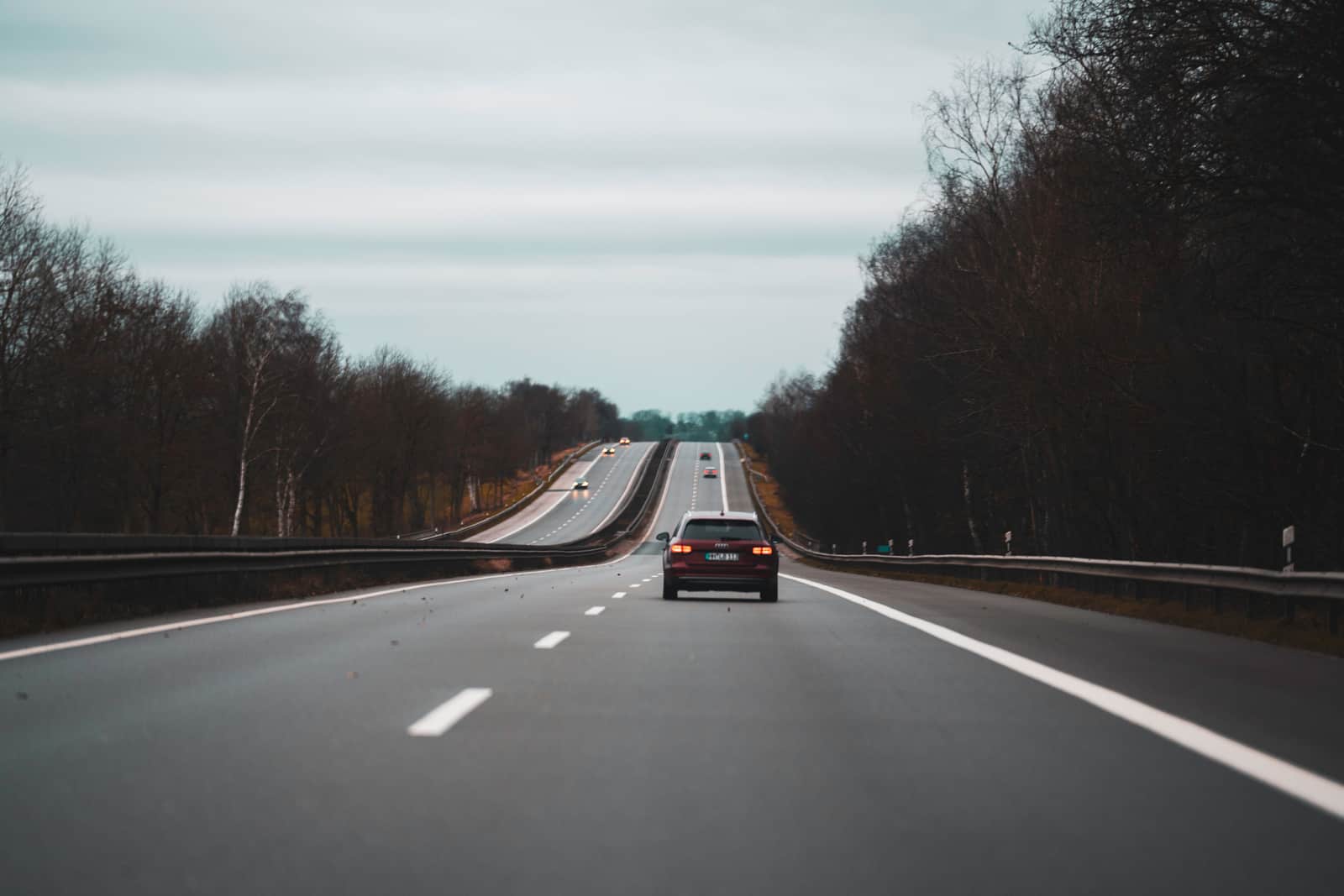
The trade winds pile cloud against the north of the island at roughly six hundred to fifteen hundred metres. That belt is why the north is green and the south is not, and why a forecast for one coast tells you nothing about the other. It also means the most reliable trick on the island: when it is grey where you are, drive up through it. Above the belt the sun is out and the crater is usually clear.
Driving through the belt itself is the part to be ready for. It is not fog in the British sense so much as low cloud sitting on a bendy road: visibility drops, the surface goes greasy, and the temperature falls several degrees in a few hundred metres of climb. Dipped headlights, no fog lights unless it is thick, and more distance than feels necessary. It usually lasts ten minutes and then you are above it in full sun.
Fuel, brakes and the things that cost money
What the cover leaves out →01 Fuel is cheap here, and one-way
Canary fuel is cheaper than the mainland and far cheaper than the UK, which quietly makes a driving holiday here better value than the daily rate suggests. Return the tank at the level you were given it: bring it back lower and you pay the difference at the supplier's rate, bring it back fuller and nobody pays you.
02 Fill up before the climbs
There is no fuel inside the Teide park and not much on the old west coast roads, so top up in Vilaflor, La Orotava or on the motorway. An hour of climbing and an hour of descent is a real share of a small tank.
03 Low gear down, not brakes
The descents here are long rather than steep, and continuous braking for forty minutes is what cooks the pads and boils the fluid. Second or third gear, let the engine hold the car, and use the brakes for the corners rather than the gradient.
04 What standard cover leaves out
Wheels, underside, windscreen and interior sit outside standard insurance, and they are exactly what a walled mountain road takes first. Reducing the excess when you book is the cheap way to deal with that, and it is offered on the car rather than at collection.
05 Your voucher is the number to call
It names your supplier and how to reach them, which is the first call to make if anything happens on the road. Keep it on your phone rather than in an inbox you need signal to open. The rest of the procedure is on the terms page.
The rules that actually catch people
What it costs to hire →Three of them, and none are obscure. Hire cars are allowed on paved public roads only, so the tracks into Teno and the back of the Anaga are out, whatever the map app suggests. Standard cover excludes the wheels, the undercarriage, the windscreen and the interior, which is the exact list of what a walled mountain road takes first; each car shows its deductible at every cover level before you book, so car hire in Tenerife with no excess comes down to the car and the level you pick. And fines, tolls and parking are yours: a speeding ticket issued to the car finds you later through the supplier.
Four drives worth the fuel
Santa Cruz and Las Teresitas →The crater road from the south, an hour up through Vilaflor and the pines, which is Teide by car and the one drive most people book the week around. Masca, half an hour from the southern resorts, slow and worth every minute of it. The Anaga ridge from La Laguna, which is laurel forest and sea on both sides. And the west coast, where the cliffs drop five hundred metres straight into the water; if you are staying out that way, collecting under the cliffs starts from the town itself rather than an hour down the motorway. Nothing on that list needs a special car, and everything on it needs a car of some kind.
Size is the only real decision, and it goes the opposite way to instinct. A compact car is better on every one of those four drives, better in the old towns and cheaper to fuel. Go bigger only when the party needs it; with children aboard a seven seater, the car seat laws in Spain decide where they sit: 135 cm and under in an approved restraint, in the back as a rule, and the third row counts as the back. And if nobody in the party drives a manual, filter for an automatic booked from the start: they are a minority of the list, and on an island of switchbacks they are worth the difference.
Frequently asked questions
The northern airport →The questions below are the ones people actually ask before they collect a car here: the limits, the mountain roads, the tracks that are off limits and who pays a fine.
Which side of the road, and what are the limits?
The right, and the limits are the Spanish ones: 120 on the motorway, 90 on main roads, 50 in towns and 30 on single-lane urban streets. The TF-1 and TF-5 are both free, so no tolls to plan for.
I have never driven on the right. How bad is the first hour?
Easier than the worrying suggests, because the first hour is the gentlest part of the island. Both airports put you on a motorway within a couple of minutes, so nothing asks you to negotiate a town while the car is still unfamiliar. Three things catch people and all of them are small: you sit on the left and change gear with your right hand, roundabouts run anticlockwise and whoever is already on one has priority, and the drift is always towards the right-hand kerb, so a passenger saying which lane for the first few junctions is worth more than any amount of reading. Spend five minutes in the car park on the seat, the mirrors and finding the indicators before you move at all.
Are the mountain roads frightening?
The famous ones are narrow rather than dangerous. Masca and the old TF-436 are single track in places with passing bays and a drop on one side, and they are driven by ordinary hire cars every day of the year. Go slowly, use the horn on blind hairpins, and let the locals past.
Can I drive up to Teide in a normal car?
Yes. The TF-21 is a wide, well surfaced road all the way to the caldera and it is about an hour from the southern airport. It climbs to over two thousand metres, so a small engine will feel slow and the temperature drops sharply, but no special vehicle is needed.
What about the dirt tracks in Teno and Anaga?
Off limits in a hire car. The rental terms allow paved public roads only, and standard cover excludes the underside and the wheels, which is exactly what a rough track damages. The good roads up there are sealed anyway.
Who pays a speeding fine?
You do. Fines, tolls and parking are the renter's responsibility, and a ticket issued to the car reaches you afterwards through the supplier. Ignoring it is not an option that works.
How does the parking colour code work?
Blue lines mean a paid bay: buy a ticket from the meter for a limited stay and leave it on the dash. Unmarked white bays are free. Yellow means no parking at all. The blue zones are the ones that fill first in the resorts and the two cities, and a ticket follows you home through the supplier.
Can I take a dog in the car?
Small pets only, and in a travel carrier for the whole journey rather than loose on a seat or on a lap. That is the rental condition, and Spanish road law is stricter here than most visitors expect: an animal loose in the back runs to EUR80 to EUR200, and one in the front passenger seat can reach EUR500 even inside its carrier, because it counts against the driver's freedom of movement. Anything bigger than carrier-sized is a conversation with the supplier before you book, not at the desk.
Is fuel expensive, and where do I fill up?
Fuel in the Canaries is cheaper than on the Spanish mainland and much cheaper than in the UK, which is one of the quiet arguments for driving here. Fill up on the motorway rather than at the last station before the airport, and remember there is nowhere to buy fuel inside the Teide park. Petrol is Sin Plomo 95 or 98 and diesel is Gasoil, which is the pair worth memorising because most stations are self service and some want the card in the machine before the pump will run. Your paperwork says which the car takes.
Ready when you are
All pickup pointsLive prices for your dates from any pickup point on the island, with the deposit and the cover shown on every car before you commit.