Car hire inPuerto de la CruzThe north coast · half an hour from Tenerife North
Pick-up & drop-off
Dates
Airport pickupin the arrival areaFree cancellationon most carsNo depositon many carsUnlimited mileageon most carsDeposit and covershown before you bookNo hidden feesprices in EUR
Pick-up
Dates
A different island up here
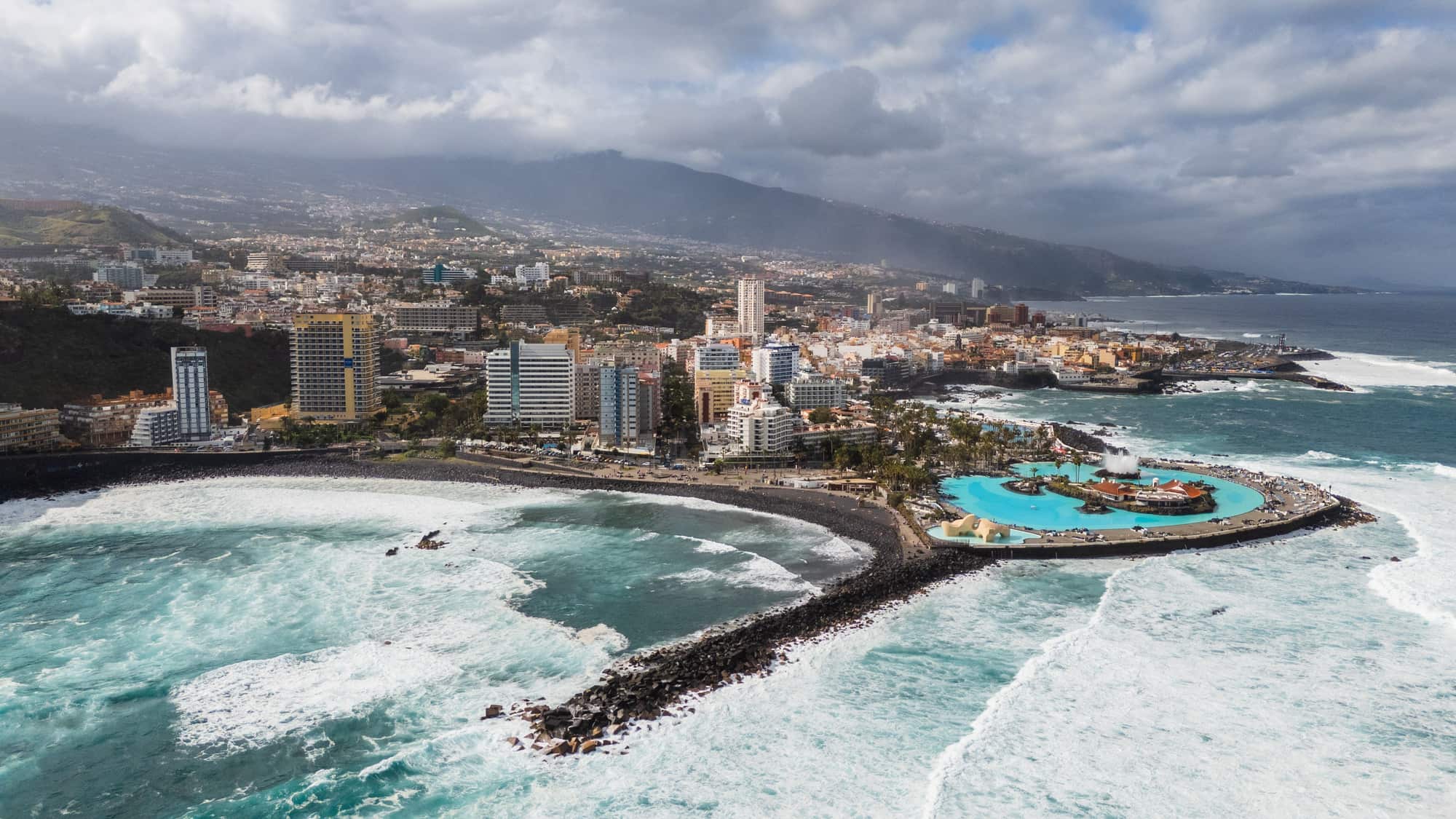
The full list of pickup points →Puerto de la Cruz is the north, which on this island means green instead of dry, cloud instead of guaranteed sun, and a town that existed for two hundred years before tourism arrived. It sits under the Orotava valley with the crater above it, and the weather differs from the south: the same afternoon can be overcast here and blazing in Los Cristianos. A car is what lets you chase the better half of that, which is the real argument for hiring one here.
The second argument is position. This town sits closer to the things people fly to Tenerife to see than any resort in the south does: the crater is under forty minutes away, the Anaga forests under fifty, Garachico half an hour along the coast and the Orotava valley starts at the top of the road out of town. A week based here with a car covers ground that would be a series of full days from Los Cristianos, and most of it on roads that are worth driving in their own right.
Getting here from the airports
Landing at Tenerife South →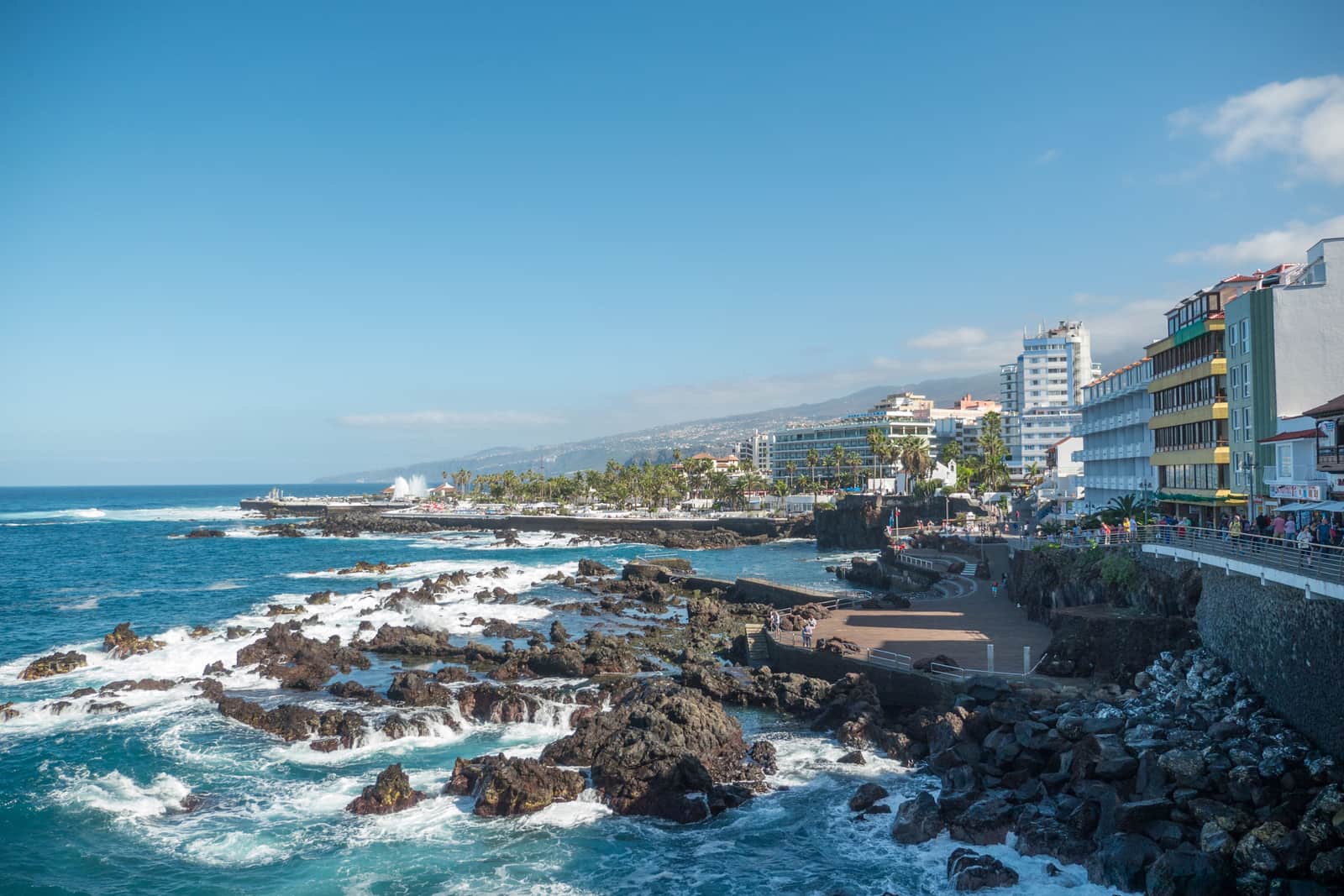
This is the one place on the island where which airport you fly into really matters. Tenerife North is about half an hour away. Tenerife South is an hour and twenty, and ninety odd kilometres of it, which is a long way to drive on the evening you land. If your flight lands in the south anyway, the motorway runs most of the route and the last stretch drops you into the valley from above.
That final descent is worth a word, because it catches people out on their first evening. The TF-5 comes over the shoulder of the valley and drops several hundred metres into the town in a succession of long curves, often out of cloud and into it, and the exits for the centre arrive quickly once you are down. Use a low gear rather than riding the brakes, and if you are arriving in the dark after a southern landing, give yourself the extra twenty minutes rather than the map time.
Timed from the town, not from the airport
What the roads are actually like →01 La Orotava, 9 min
Seven kilometres uphill to the old town above you, and the start of the road to the crater. Park at the top and walk down; the streets are steep, narrow and mostly one way.
02 Garachico and Icod, 27 to 31 min
Twenty-two kilometres west to the dragon tree at Icod, another four minutes to the lava pools at Garachico. The coast road between them is one of the best short drives in the north.
03 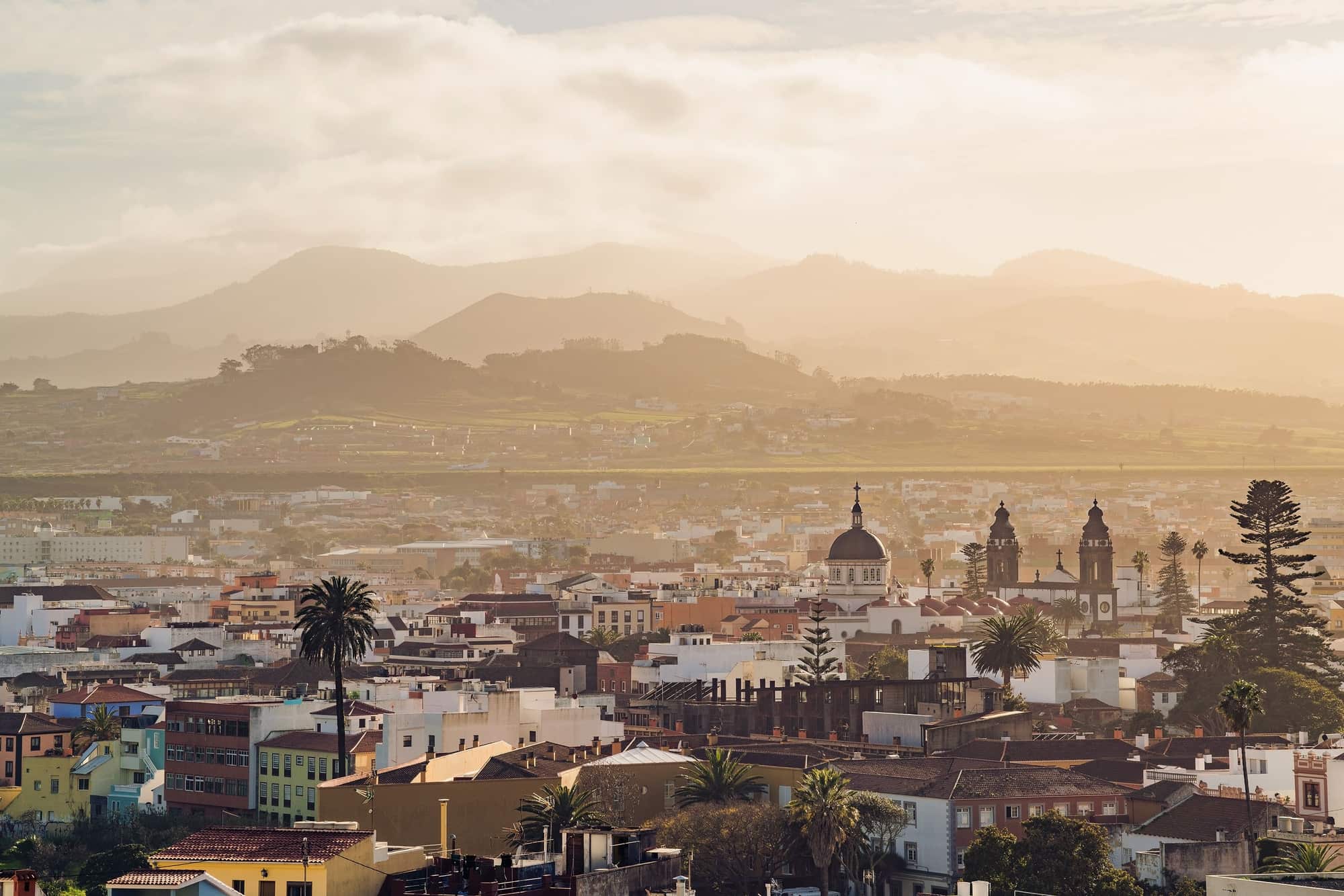 Tenerife North airport, 27 min
Thirty-one kilometres on the TF-5. The northern airport is the one to fly into if the schedule allows it, and this is the run that makes it worth doing.
04 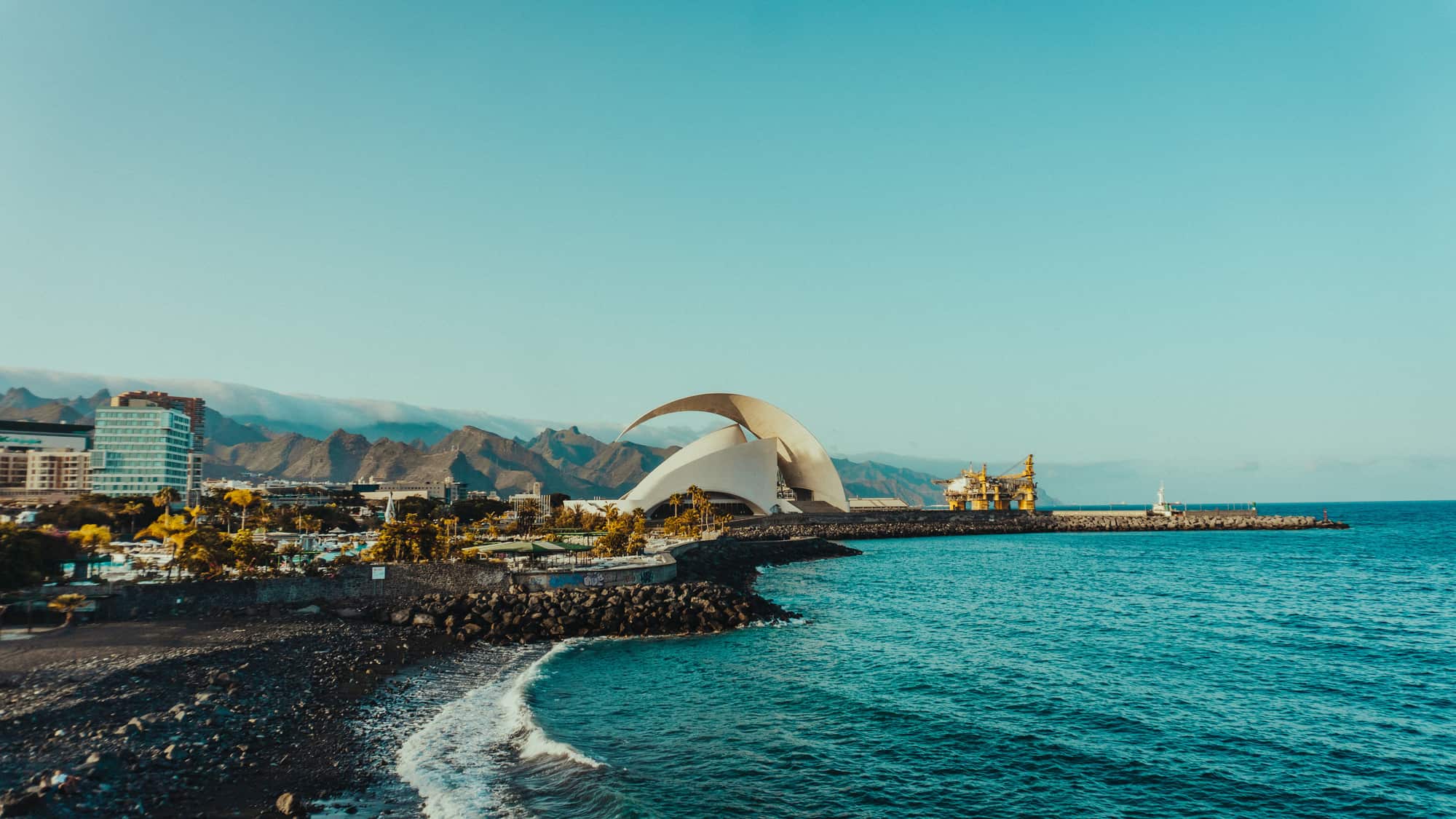 Santa Cruz, 30 min
Thirty-eight kilometres east to the city over the ridge, with La Laguna on the way. The one drive from here where traffic is real: time it outside the commute and use a garage rather than the street.
05 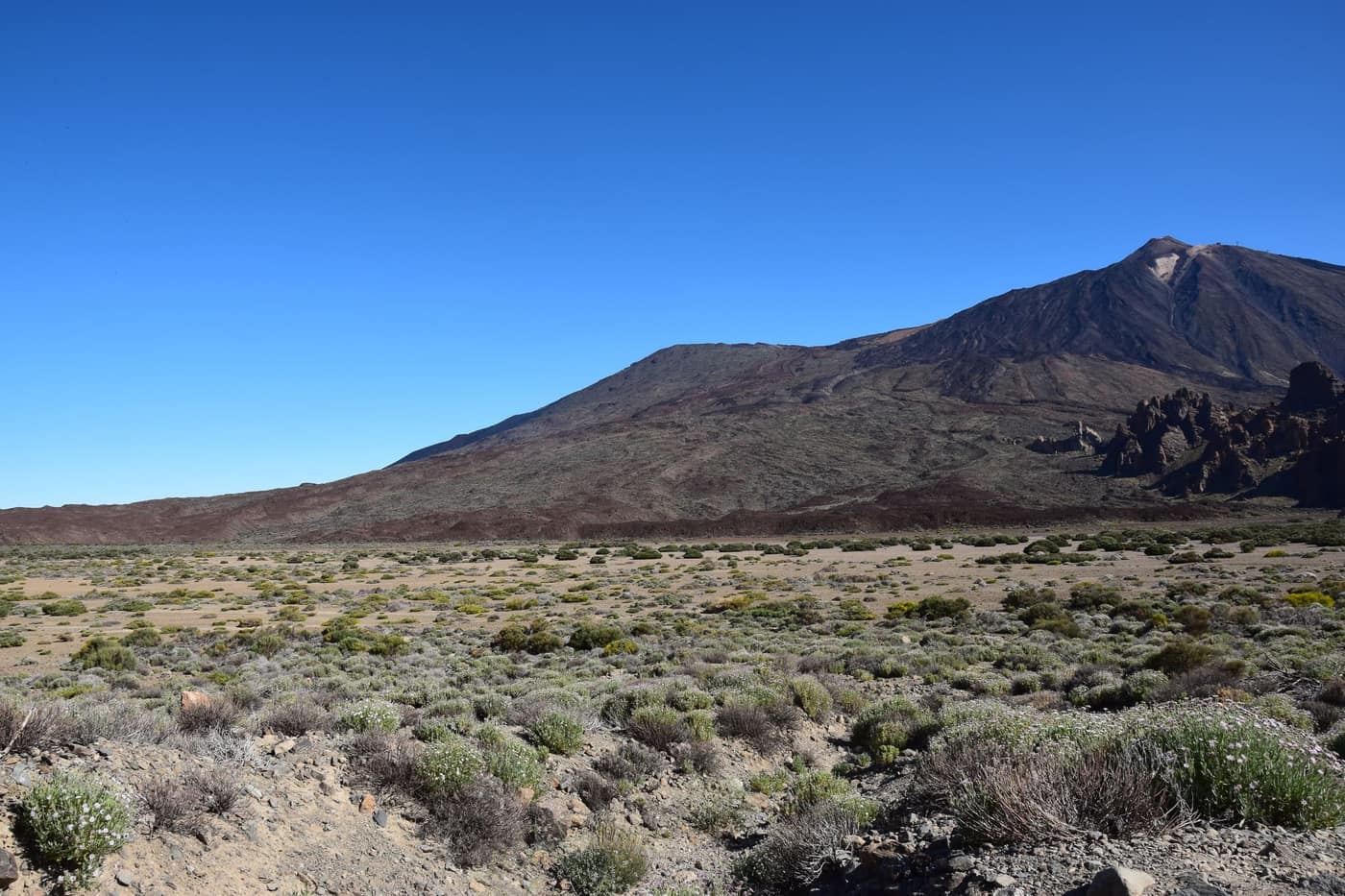 Teide, El Portillo, 38 min
Twenty-nine kilometres up the TF-21 through the pines, and the shortest run to the crater from anywhere on the island. On the road up to Teide you are usually above the cloud inside twenty minutes.
06 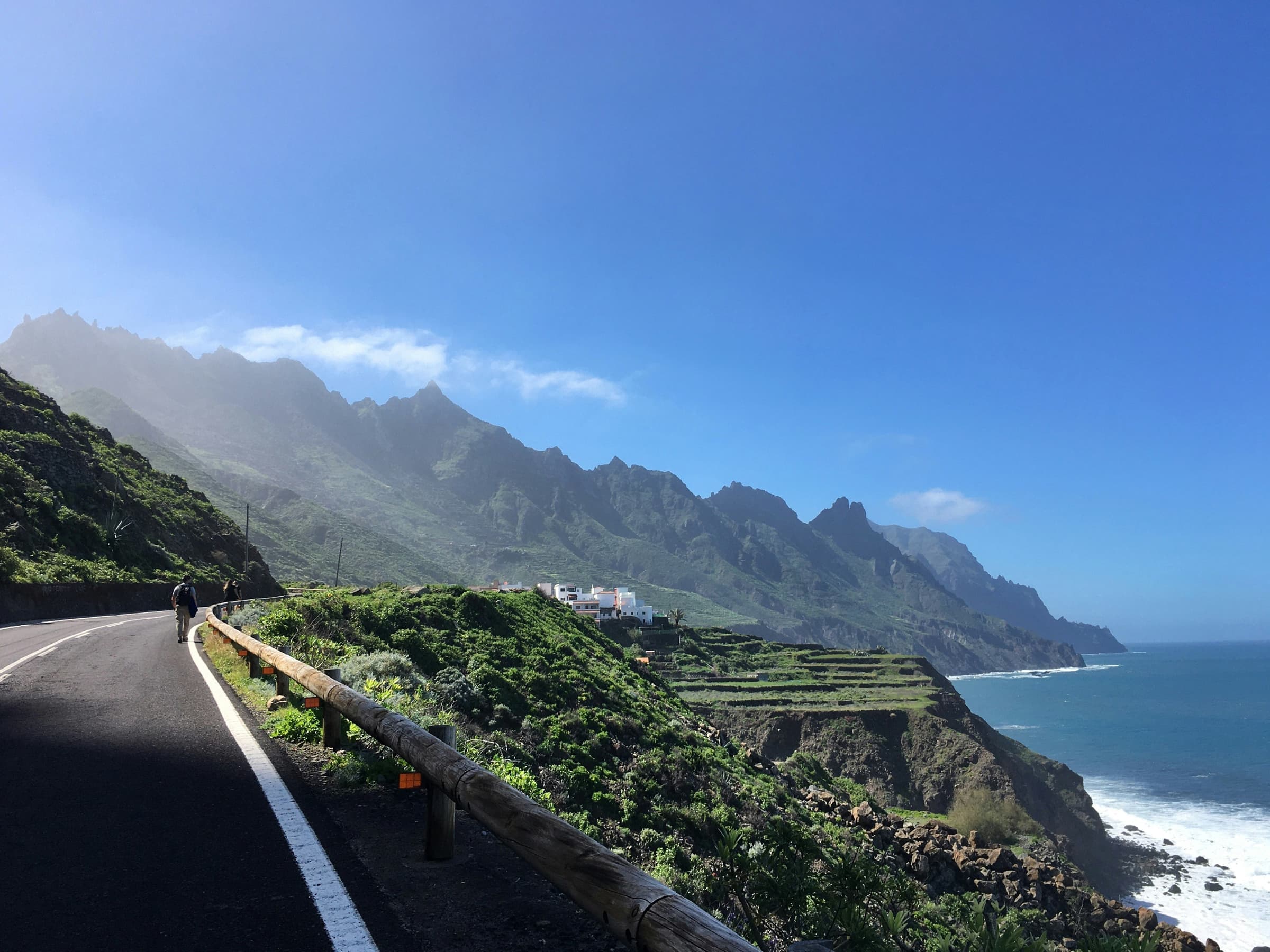 Taganana and the Anaga, 47 min
Forty-nine kilometres out along the ridge road into laurel forest, with the sea on both sides. Slow, bendy and worth the whole day. Stay on the sealed roads; the tracks are off limits in a hire car.
These are times without traffic, so a real journey is that or longer, never shorter. The south is the long haul from here and there is no way round it: Costa Adeje is 69 minutes and Tenerife South 82, which is why the airport you fly into matters more at this end of the island than anywhere else.
One way, which this coast is built for
How a one way booking works →A one way car rental collects in one place and leaves the car in another: on this side of the island that is worth planning the holiday around. Puerto de la Cruz to the southern airport is eighty-two minutes and ninety-seven kilometres, the single longest routine drive on Tenerife, and doing it twice to return a car costs most of a day. Fly into one airport and out of the other, or start in the green north and finish on a southern beach, and the car follows the itinerary instead of fighting it. Set the drop-off separately in the search: the results then show only cars whose supplier allows that pairing, with any one way fee already in the price.
Ready when you are
All pickup pointsPick your dates and the widget opens on the Puerto de la Cruz pickup point, with both airports a click away if you would rather collect where you land.
Check datesLive prices for your dates. Free cancellation on most cars.
Parking in a town older than the car
Check dates →The old town was laid out for people on foot, and it has never pretended otherwise. The streets around the harbour are narrow, largely one way and busy, and the honest plan is to put the car in a paid underground car park near the centre and leave it there. Blue-lined bays on the street are the paid ones, bought from a meter for a limited stay, and unmarked white bays are free; the free ones start a few minutes uphill and are worth the walk.
Ask your hotel what it actually offers before you assume you can park at the door, because plenty of the older places here have no parking at all and the ones that do usually charge a nightly rate for it. That cost belongs in your sums next to the hire. And keep the car small: the difference between a compact car and an estate in these streets is the difference between parking and circling. Parking tickets, like speeding fines, are the driver's to pay and reach you later through the supplier.
Worth knowing before you book
Check dates →01 The old town was not built for parking
Streets near the harbour are narrow and mostly one way. There are paid car parks around the centre and it loosens up a few minutes uphill, but a big car is a liability here in a way it is not in the purpose built southern resorts.
02 Cloud is not bad weather, it is altitude
The north catches the trade winds, so a grey morning in town is often a blazing afternoon eight hundred metres up. Driving out from under it is the whole trick, and it is why people who keep a car here end up using it daily.
03 Keep to sealed roads in the Anaga
The forest tracks up there are tempting and off limits: the rental terms cover paved public roads only, and standard insurance leaves out the underside and the wheels, which is what an unsealed track damages. It is worth the cover before you sign before you pick the car; the sealed roads up there are the good ones anyway.
04 The card is what turns people away
Bring the licence itself, as a card: photographs and digital licences are not accepted, and neither is a copy. Bring a physical credit card in the main driver's name with raised numbers for the deposit hold. Some suppliers take a debit card instead, also physical and in the same name, and your voucher is the thing that tells you which.
05 Landing south, leaving north, or the reverse
This is the town where a one-way makes the most sense on the whole island: fly into the south, drive up, and hand the car back at Tenerife North on the way home. leaving the car in the south is priced into the booking before you commit, and the choice between the two airports is the deepest on the island.
06 Fuel and fines
Return the fuel at the level you were given; nobody pays you for bringing it back fuller. Fill up on the TF-5 rather than in the old town. Speeding fines and parking tickets are the driver's, and a ticket issued to the car reaches you afterwards through the supplier.
Which car suits the north
See what is available →Small, and for once not only because of the parking. The roads worth driving up here bend constantly: the TF-21 into the crater, the coast road to Garachico, the whole Anaga ridge. A compact car is more pleasant on all of them, easier in the old town, and cheaper to fuel over a fortnight of daily use, which is what a car gets here rather than the two or three outings it gets in a southern resort.
Two things move you up a class. Four adults with luggage climbing to El Portillo will feel the smallest engines on the way up, and the north is where you will be doing that climb repeatedly. And if nobody in the party drives a manual, filter for an automatic for the north from the start: they are a minority of the list, and on roads with this many bends and gradients an automatic is easier to live with.
Frequently asked questions
Or just check dates →The questions below are the ones that decide how a week up here works: which airport to fly into, where the car goes, how the cloud behaves and what you need when you collect. The rental conditions themselves are written out in full on the terms page.
Which airport should I fly into for Puerto de la Cruz?
Tenerife North if the schedule allows it. It is about half an hour away against an hour and twenty from the south, and the drive is easier at the end of a long day. Plenty of people still land in the south because that is where the cheap flights go, and the motorway makes it painless enough.
Is parking hard in the old town?
Yes, in the narrow streets near the harbour, and that is normal for a town built long before cars. There are paid underground car parks around the centre and street parking gets easier a few minutes uphill. Ask your hotel what it offers before you assume you can park at the door.
Do I even need a car if I am staying here?
For the town itself, no. For the north, very much yes: the Anaga forests, Garachico, the Orotava valley and the road up to the crater are all short drives that no bus does conveniently, and the north is where the island stops looking like a holiday brochure.
How long is the drive up to Teide from here?
Thirty-eight minutes to El Portillo, the northern entrance to the park, which is the shortest run to the crater from anywhere on the island. The TF-21 climbs out of the valley through the pine forest and you are above the cloud within twenty minutes of leaving the town. The Parador, right in the caldera, is another quarter of an hour on.
Is the north harder to drive than the south?
Busier and bendier, not harder. The TF-5 is a proper motorway but it carries commuter traffic around La Laguna and Santa Cruz, and the roads off it wind because the land does. Nothing needs a special car. Allow more time than the distance suggests and take the descents in a low gear.
Who am I actually renting from?
A local supplier with its own fleet on the island, not a global chain. You book through this site, your voucher names the supplier and where to meet them, and you deal with them for the car itself. It is why the cars here suit these roads.
What do I need when I collect the car?
The licence as a physical card, in Latin script and in date, and a payment card in the main driver's name. Most suppliers want a real credit card with raised numbers to hold the deposit; your voucher will say if a debit card is accepted instead.