Los Cristianos toSanta CruzCar hire brought to your address · Puerto de la Cruz, Masca and the Teide crater as day drives
Pick-up & drop-off
Dates
Airport pickupin the arrival areaFree cancellationon most carsNo depositon many carsUnlimited mileageon most carsDeposit and covershown before you bookNo hidden feesprices in EUR
Pick-up
Dates
How far is Santa Cruz from Los Cristianos?
Every pickup point on the islandLos Cristianos to Santa Cruz is about 57 minutes and 77 km without traffic, and the hire car for the day is brought to your address in Los Cristianos. Santa Cruz, the island's capital, is where the TF-1 meets the TF-5. The longer day goes on to the north-coast resort of Puerto de la Cruz, about 76 minutes and 78 km away, while the mountain days are shorter: Masca is about 36 minutes and 40 km, and the Parador in the Teide caldera about 53 minutes and 47 km.
Tenerife's motorways are toll-free, and there are fixed speed cameras on the TF-1 and the TF-5; fines, like fuel and parking, are the renter's to pay. Hire cars are allowed on paved public roads only, so the tracks in Teno and in parts of Anaga stay off the plan. The shortest chargeable rental is 24 hours, so a car booked for a single day out is charged as a full day.
Where do I fill up before the drive north?
Check dates
In Los Cristianos, before setting off: the BP on Bulevar Chajofe 2 is open 24 hours. At Santa Cruz, two stations stand where the TF-1 meets the TF-5: the BP at Avenida Tres de Mayo 85, open from 06:00 to 22:00, and the DISA on Ortega y Gasset 1, open 24 hours. There is no fuel station inside the Teide national park, so a crater day fills up on the coast.
The car goes back with the fuel level it had at the handover. A lower level is charged at the rental company's rates, and a fuller tank is not refunded. Fuel in the Canaries is cheaper than in mainland Spain or the UK: the islands apply neither IVA nor the state hydrocarbons excise, and levy their own fuel tax and IGIC instead.
How long are the day drives north from Los Cristianos?
The roads on the way north01 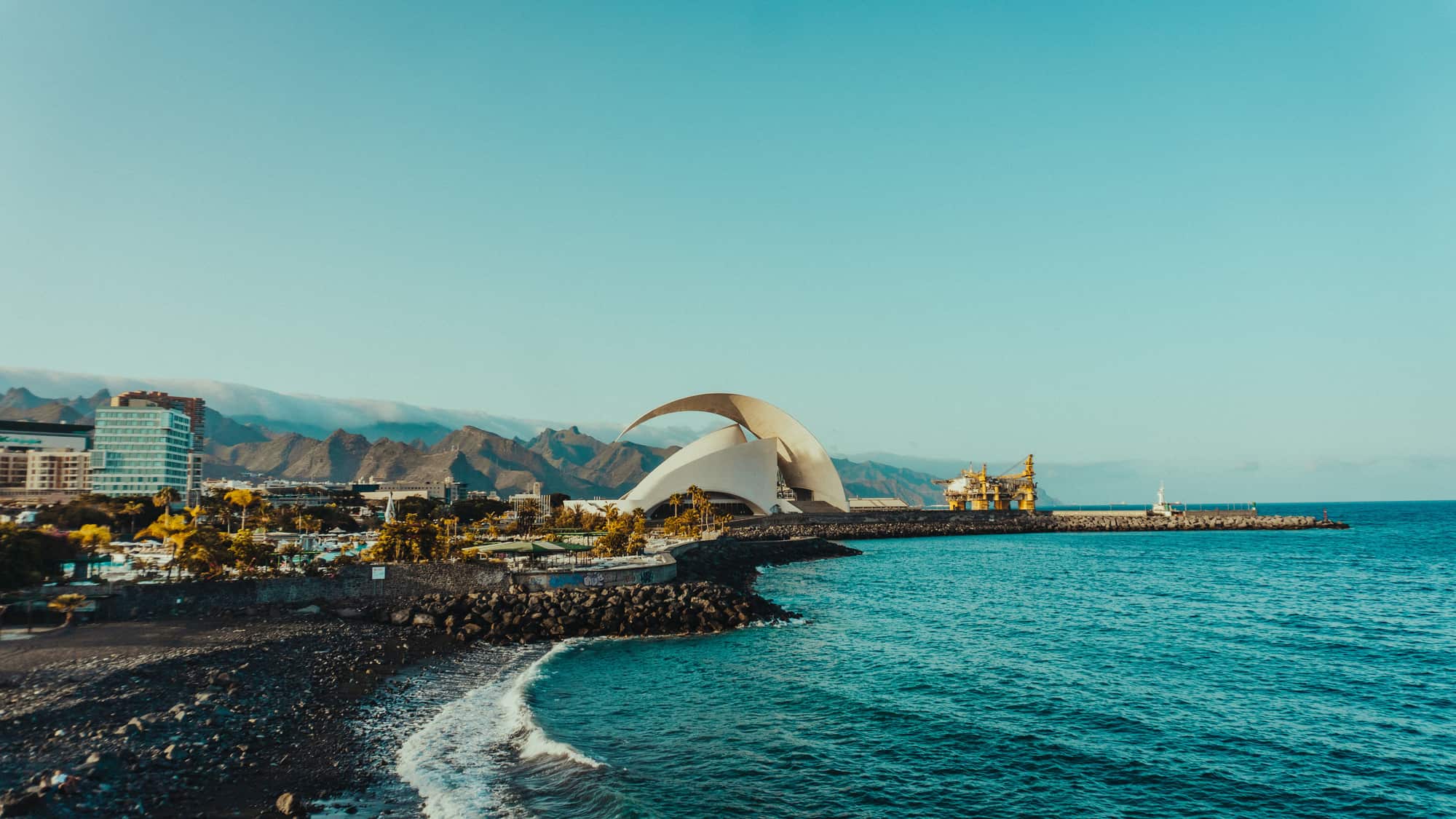 Santa Cruz, 57 min
About 77 km. The car park at the Intercambiador in the city has 1,421 spaces. A low-emission zone for Santa Cruz was approved on 24 July 2026 and comes into force in 2029, Monday to Saturday from 07:00 to 20:00. The El Bailadero tunnel on the TF-134 is 375 m long and unlit.
02 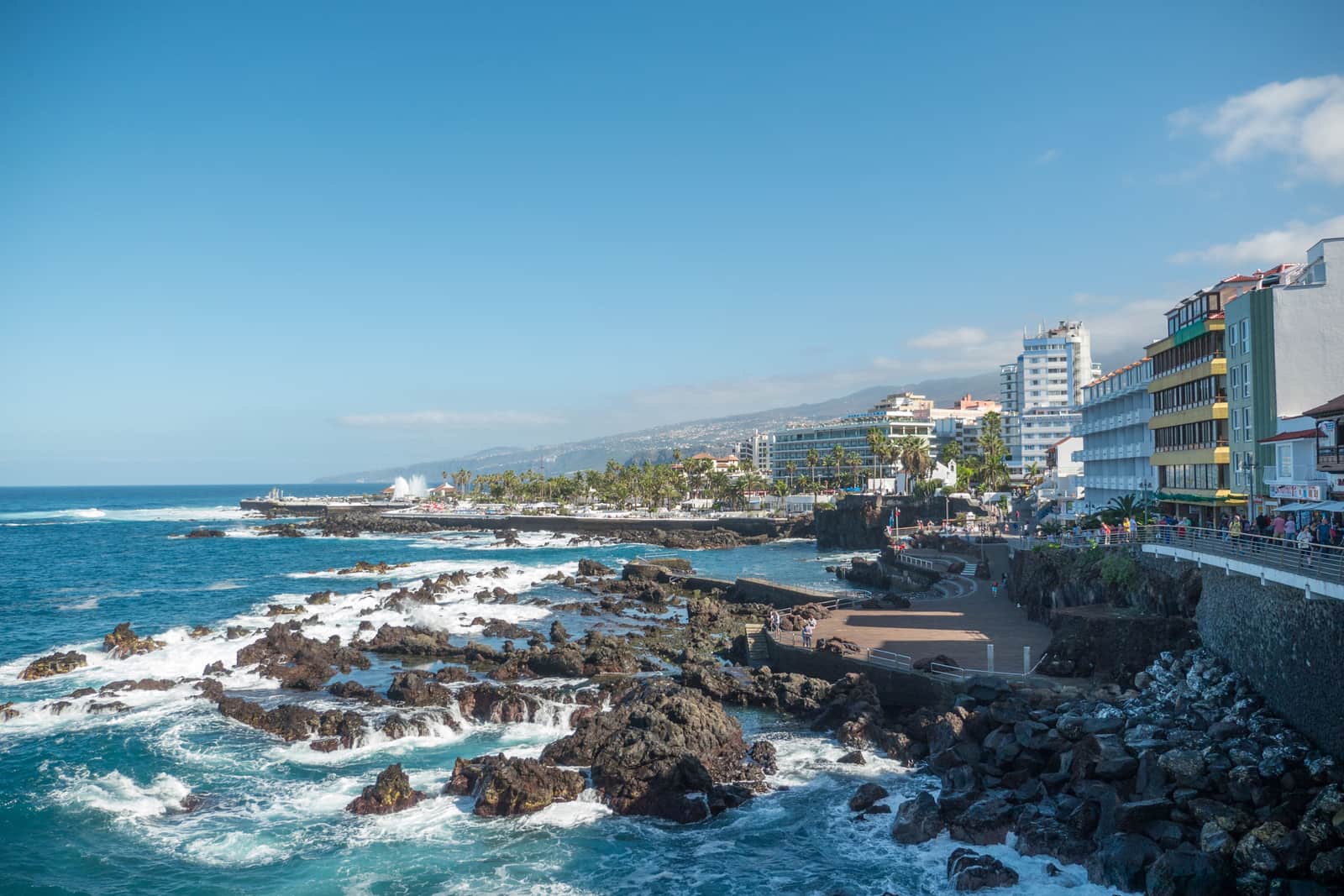 Puerto de la Cruz, 76 min
About 78 km, the longest of the drives north. A Cepsa and a BP stand on the Carretera del Botanico in the town, and the Martianez false tunnel on the TF-31 is 292.7 m long and unlit.
03 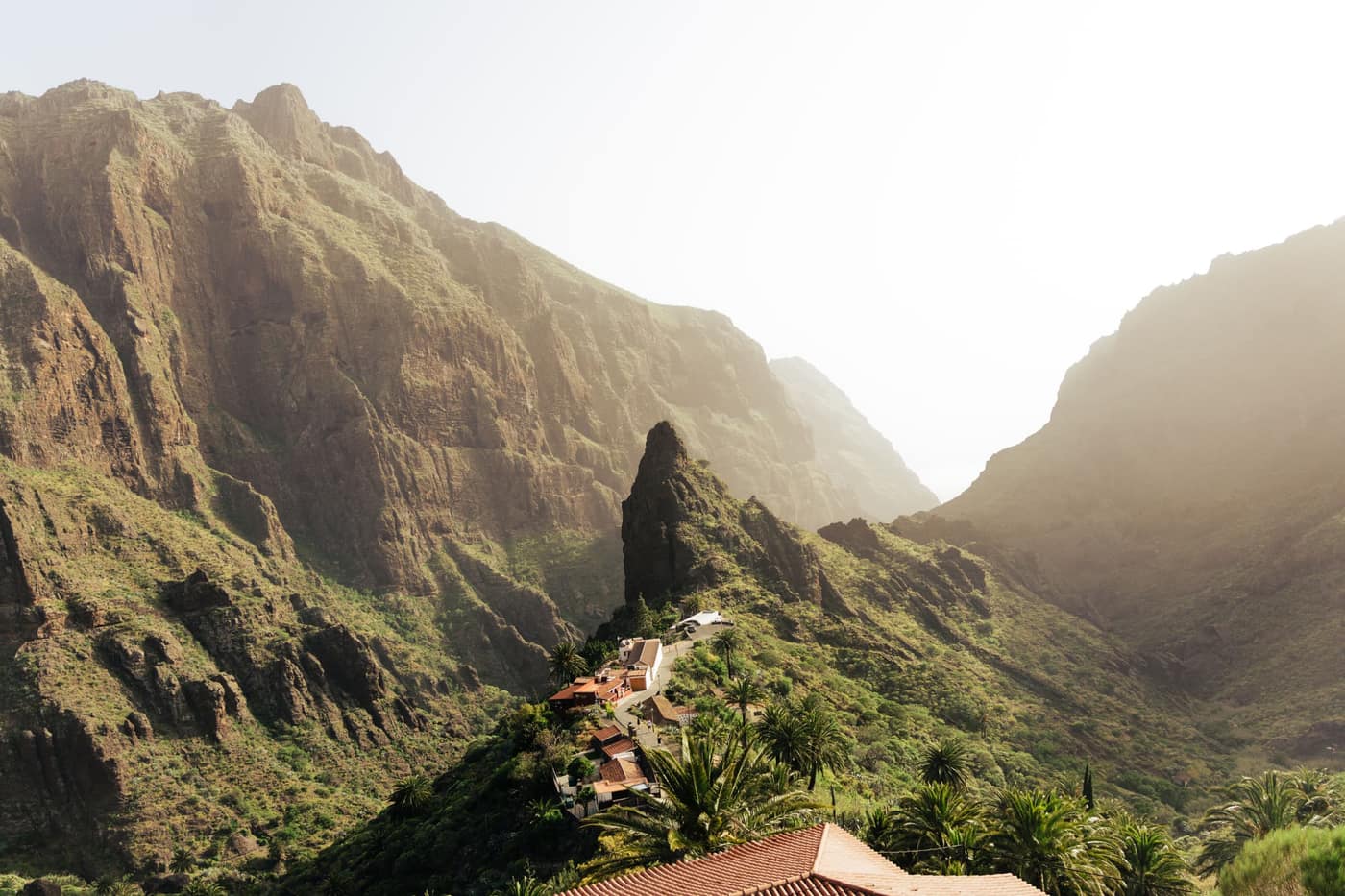 Masca, 36 min
About 40 km, the last part on the TF-436, the only road in and out of the village. While a fire-risk alert is declared, the Cabildo runs access control on that road from 09:00 to 16:00, with checkpoints at Las Lagunetas and Santiago del Teide, and vehicles driven by visitors for purely recreational purposes are turned back. The control switches on and off with the risk, so check before setting off; bus line 355 runs to Masca. Since May 2025 tour coaches in Teno are limited to 10 m and run one way: drive the TF-436 south and you travel with them, north and you meet them.
04 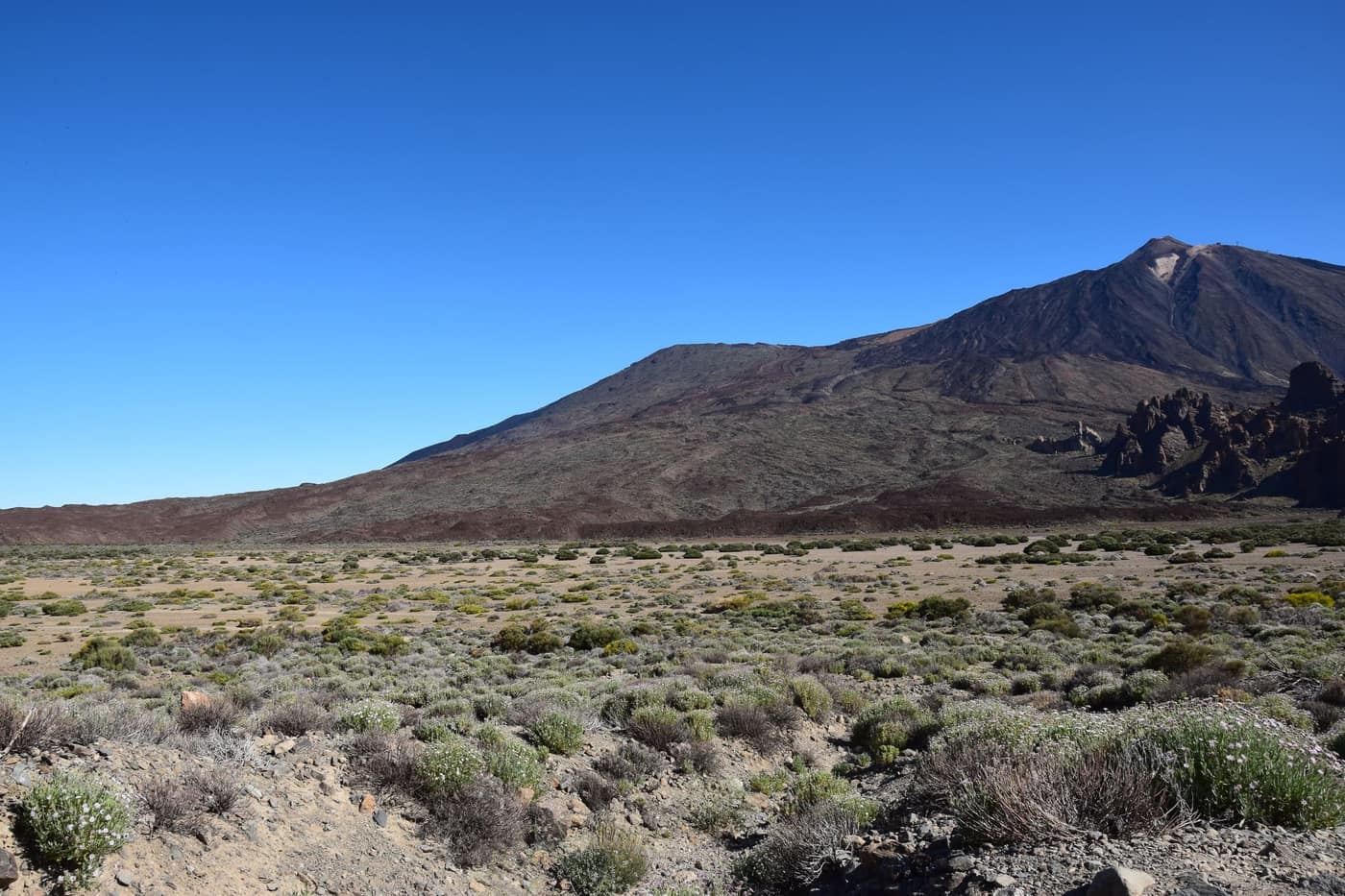 Teide crater, 53 min
About 47 km to the Parador de Las Canadas, at the end of the climb into the national park. The cable car base is at km 43 of the TF-21, at 2,356 m, and its top station, La Rambleta, at 3,555 m. The summit, at 3,715 m, is reached on the Telesforo Bravo trail, booked in timed slots on Tenerife ON and no longer free for non-residents since 1 September 2025.
05 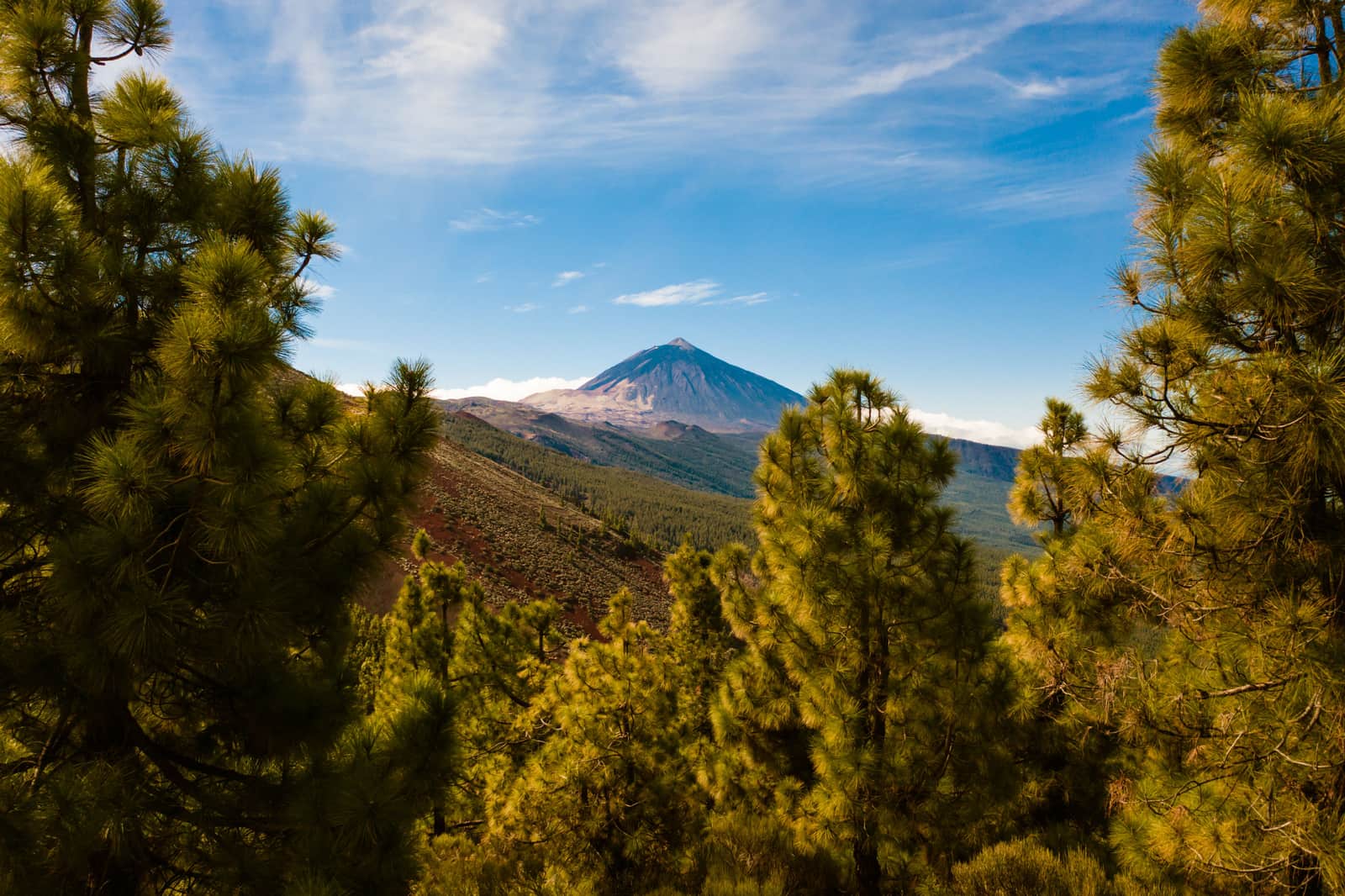 Vilaflor, 30 min
About 25 km to Vilaflor, on the TF-21 route up to the crater. It is the highest municipality in the Canary Islands, at roughly 1,400 m.
06 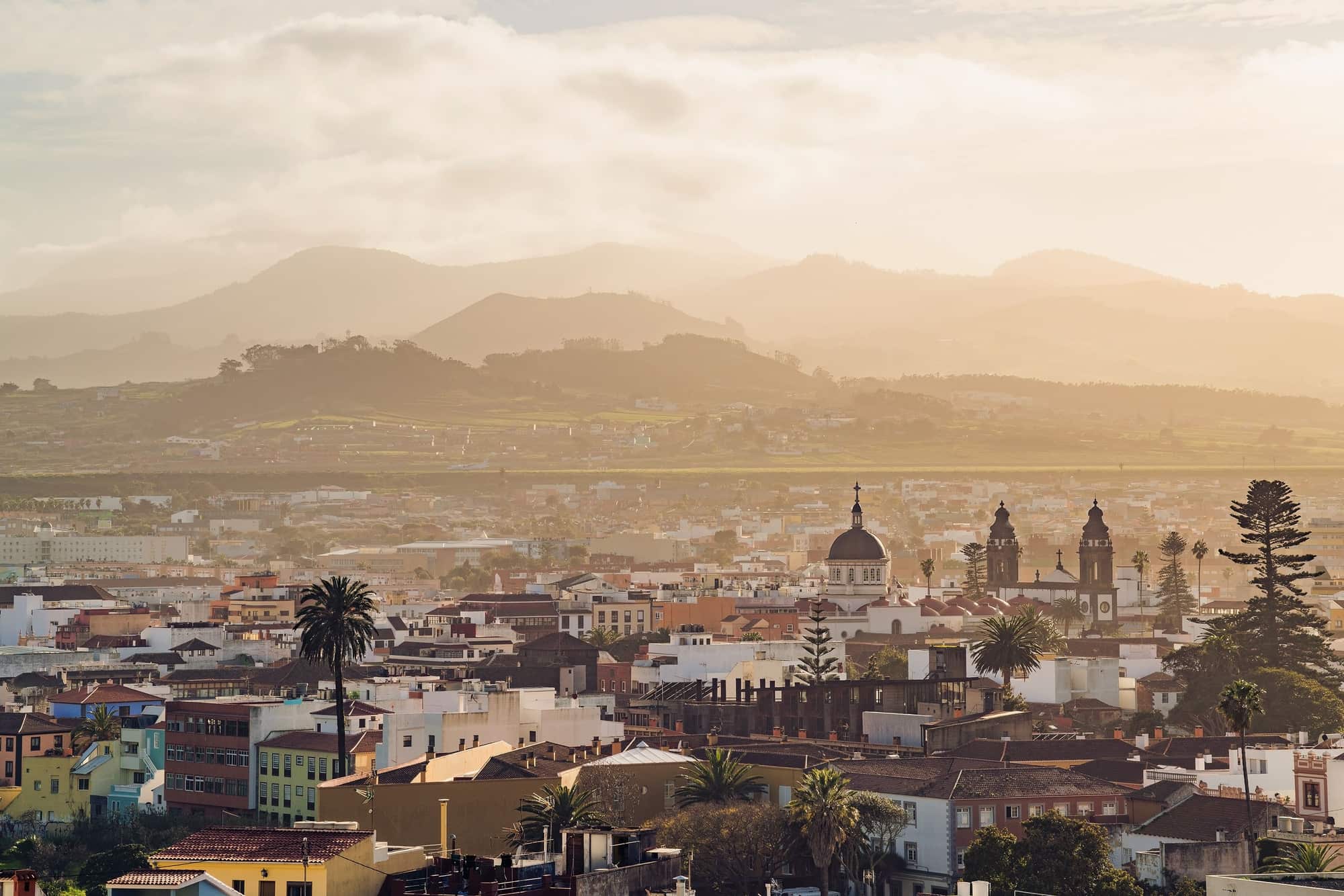 Tenerife North, 63 min
About 84 km to Los Rodeos, the island's other airport, which stands at 633 m. The PCAN on the TF-152 at km 2.08, close to the terminal, is open 24 hours.
These times are without traffic, so a real drive takes that long or longer. Up in the crater it is about 11 degrees colder than on the coast on the annual average. Tenerife South Airport is about 33 minutes and 20 km from Los Cristianos, the other way.
What has to be ready when the car arrives?
See the cars for your datesLos Cristianos is delivery only, so the car is handed over at the address you give, and everything an airport handover asks for has to be there with you. The town runs on into Playa de las Americas along the front, and neither has a named pickup point: in both, the car is brought to the hotel or apartment you give, and each listing shows whether delivery is included or priced.
Have the licence card itself, with its details in Latin script and an expiry no earlier than the end of the rental, since copies and electronic licences are not accepted; an International Driving Permit is strongly recommended only where a licence is valid solely in the country that issued it. The card the booking asks for must be in the main driver's name, and it can be a physical embossed credit card. If a debit card is accepted, the booking and the voucher say so, and it too has to be physical, personalised, embossed and in the main driver's name.
The phone number given at booking must be reachable throughout the rental and on the day before the car is due. Each car's minimum driver age and experience are on its page, and the agent can refuse the handover if they are not met. How the rest of the rental is paid, how the deposit is held and when it comes back are in the booking and the voucher.
Ready when you are
All pickup pointsPick your dates and the search opens on Los Cristianos, where the car is brought to your address for the drives north, with Tenerife South Airport a click away for collection on landing.
Check datesLive prices for your dates, with the deposit and the cover on each car.
What does standard insurance leave out on the mountain roads?
Check datesStandard insurance does not cover the wheels, the undercarriage, the windscreen or the interior, and those are the parts a narrow mountain road is most likely to damage. That is the standard level. Each car shows the cover levels it offers, with the deductible at each cover level in its insurance comparison, so the level for the Masca and Teide days is chosen per car before you book.
After any insured event, tell the rental agent at once and get a police report; without both, the insurance is cancelled and the driver is fully responsible. Deliberate damage or neglect voids the insurance as well.
What else is in the rental terms?
Collect it on landing instead01 Delivered in Los Cristianos or collected at the airport
Los Cristianos is delivery only. At Tenerife South the named handover place is the arrival area, about 33 minutes from the town. Both are the same search, and only the pickup point changes. Set a different drop-off and the one-way fee shows with the price. A drop at the opposite airport has the widest one-way choice by a wide margin, and the search can start at either airport or at your address in Los Cristianos.
02 The parking colours
Blue-lined bays are metered with a time limit, unmarked white bays are free, and yellow lines mean no parking. In Los Cristianos the car park on Calle Valle Menendez is covered and open 24 hours a day, every day, with a 2.2 m height limit. Parking charges and parking fines are the renter's to pay.
03 Keeping it longer
To extend the rental, tell the rental agent in advance, before the original return date.
04 A clean return
A car returned so dirty that it cannot be inspected is washed at the renter's expense.
05 Pets
Only small pets may travel in a hire car, and they stay in their travel carriers the whole time.
Which car suits the drives north?
See what is availableThe TF-436 into Masca has narrow sections where even firefighting vehicles struggle to pass oncoming traffic, and a smaller car is easier to place on them. For the long days, to Santa Cruz or Puerto de la Cruz and back, most cars come with unlimited mileage.
Automatics are a minority of the list, found mainly in the compact and crossover classes rather than the economy one, so if nobody in the party drives a manual, an automatic for the drive north is the filter to set from the start. Seven-seaters are scarce, so a car for a larger party is one to book early.
Frequently asked questions
Or just check datesThe questions below cover the day drives north from Los Cristianos and the car for them: how long each drive takes, where the car is handed over and whether it can cross to another island. The rental conditions are set out in full on the terms page.
How long does it take to drive from Los Cristianos to Santa Cruz?
About 57 minutes and 77 km without traffic. At Santa Cruz the TF-1 meets the TF-5, and there are fixed speed cameras on both. Two fuel stations stand at that junction: the BP at Avenida Tres de Mayo 85, open from 06:00 to 22:00, and the DISA on Ortega y Gasset 1, open 24 hours.
How long is the drive from Los Cristianos to Puerto de la Cruz?
About 76 minutes and 78 km without traffic, the longest of the day drives north. In Puerto de la Cruz a Cepsa and a BP stand on the Carretera del Botanico, and the Martianez false tunnel on the TF-31 is 292.7 m long and unlit.
Can I drive from Los Cristianos to Masca?
The drive is about 36 minutes and 40 km, the last part on the TF-436. While a fire-risk alert is declared, access control on that road from 09:00 to 16:00 turns back visitors driving for purely recreational purposes, and it switches on and off with the risk. Check before setting off; bus line 355 runs to the village.
How long is the drive from Los Cristianos to Mount Teide?
About 53 minutes and 47 km to the Parador de Las Canadas without traffic. There is no fuel station inside the national park, so fill up first; the BP on Bulevar Chajofe 2 in Los Cristianos is open 24 hours. The summit, at 3,715 m, is reached on the Telesforo Bravo trail, which is booked in advance.
Can I take the hire car on the ferry from Los Cristianos?
Yes in principle, but not every car may leave the island: it is decided per car, so ask before you book so that a car approved for the ferry crossing is selected. For the crossing itself, check with the ferry line. From Los Cristianos, Fred. Olsen sails to La Gomera in 50 minutes, La Palma in 150 and El Hierro in 140, and Armas also runs to La Gomera. A day trip as a foot passenger needs no permission and leaves the car parked in town.
Where is the car handed over in Los Cristianos?
At the address you give. Los Cristianos has no named pickup point and is delivery only, so the car is brought to your hotel or apartment. Whether delivery is included or priced is shown on each car, and the phone number you booked with has to be reachable on the day before the handover.