Car hire inLos GigantesThe west coast · fifty minutes from Tenerife South
Pick-up & drop-off
Dates
Airport pickupin the arrival areaFree cancellationon most carsNo depositon many carsUnlimited mileageon most carsDeposit and covershown before you bookNo hidden feesprices in EUR
Pick-up
Dates
Why you need the car here
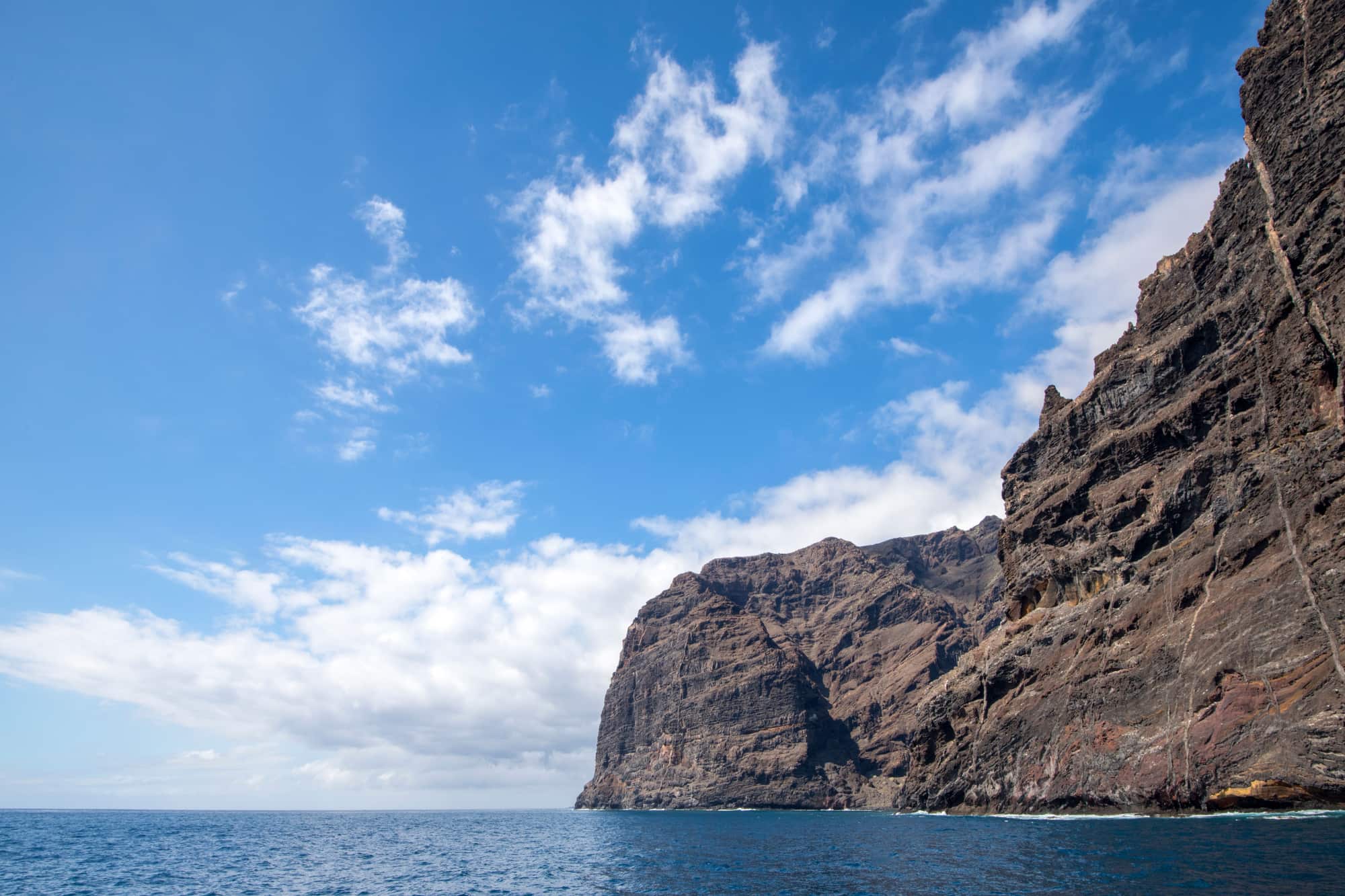
The resorts down the coast →The cliffs here fall five hundred metres straight into the water, and the town is built on the slope beside them. That geography explains everything about the place: it is steep, it is smaller than the southern resorts, and it sits at the end of the motorway rather than in the middle of everything. People come for the cliffs, the whale boats and the quiet.
It also explains why the car is closer to essential here than at any other pickup point on the island. There is no strip to walk, no second resort next door and no bus that goes anywhere you want to go at a time you want to go there. Two days will finish the town. Everything after that, the Teno roads, Masca, Garachico, the crater, is a drive, and all of it starts from the top of the hill behind the harbour.
The town on the slope
The crater road →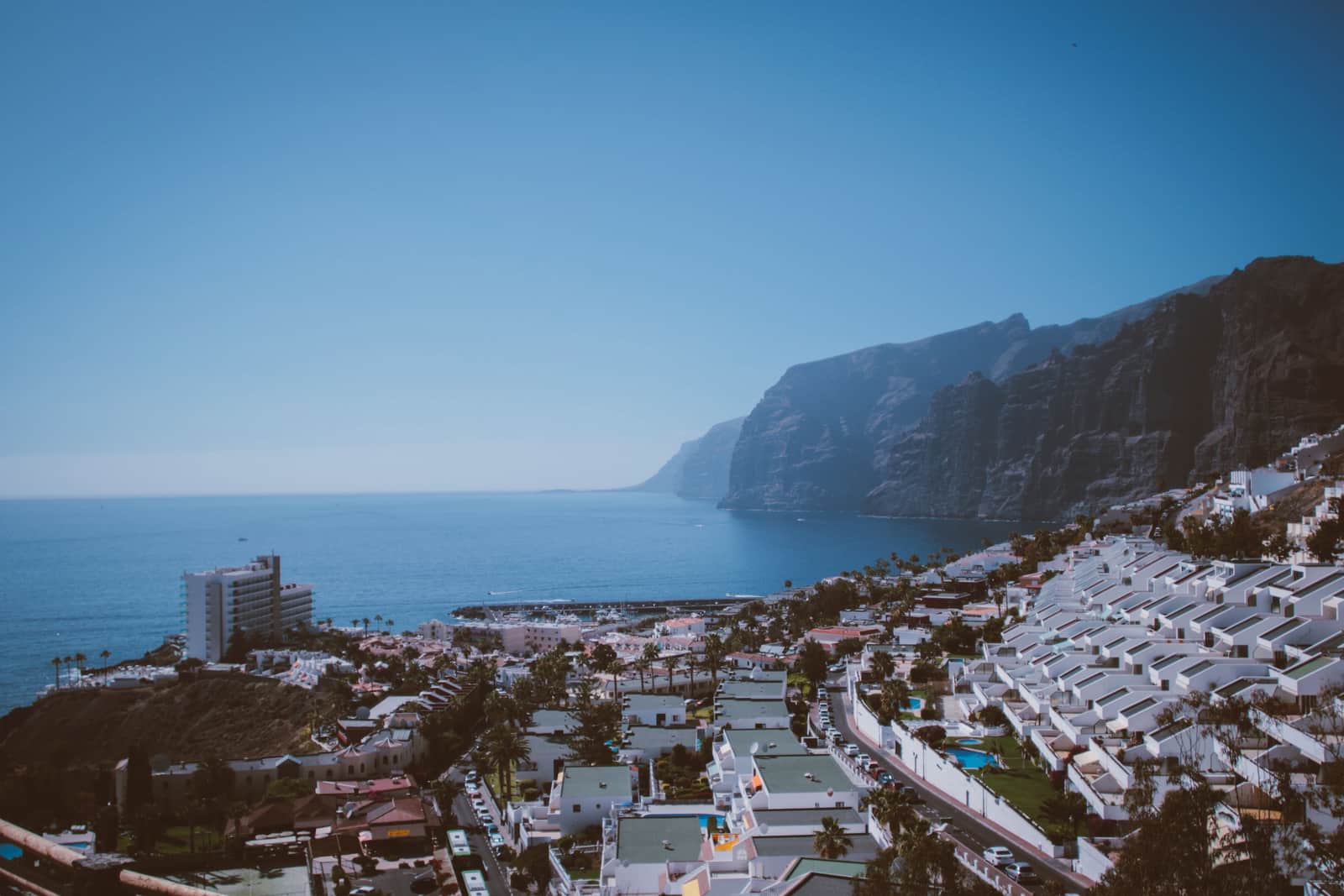
Los Gigantes is the far end of the island's road network, and that is the argument for the car in one sentence. Masca is twenty-four minutes up the hill on the old road. The crater is fifty-four inland. The southern resorts are under half an hour back down the motorway. Without a car you are choosing between a small town and a boat trip; with one, the whole west is yours.
The driving out of the town is the part worth preparing for. Every road leaves uphill, in first and second gear, on a gradient that will surprise anyone who has only driven the motorway so far, and the junction at the top puts you straight onto the TF-454. Coming back down at night, use a low gear rather than the brakes; it is a short descent but a steep one, and the same discipline the crater road needs applies here on a smaller scale.
Timed from the town, not from the airport
What the roads are actually like →01 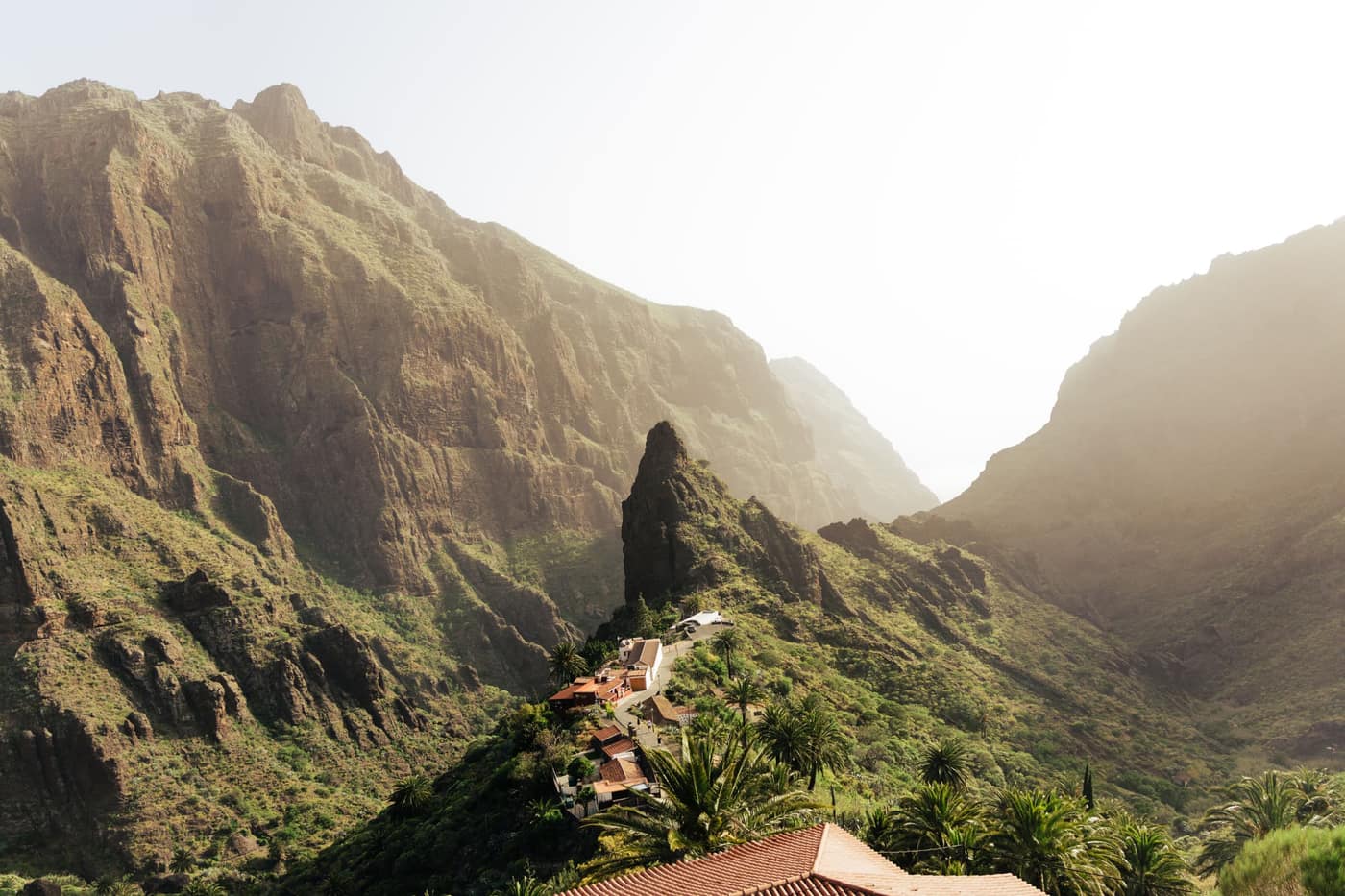 Masca, 24 min
Twenty-one kilometres, finishing on the TF-436, the only road in and out of the village. While a fire-risk alert is declared, access control refuses vehicles driven by visitors for purely recreational purposes from 09:00 to 16:00. It switches on and off with the risk, so check before setting off; bus line 355 is the alternative.
02 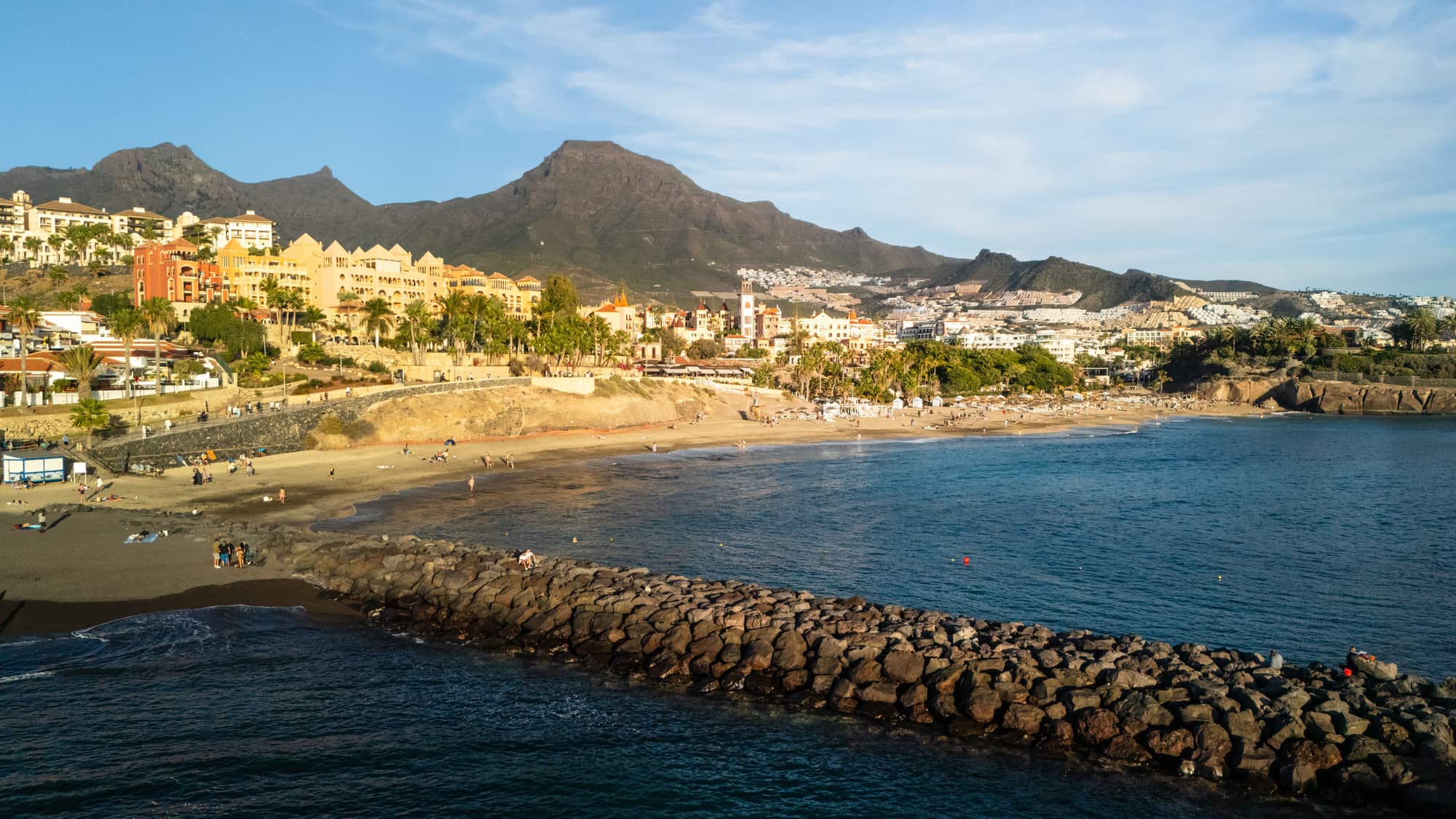 Costa Adeje, 27 min
Twenty-five kilometres back down the coast to the big resorts, for the water parks, the sheltered beaches and a supermarket run that has more choice than the town.
03 Icod de los Vinos, 40 min
Thirty-four kilometres north of the town, and Garachico is four minutes further.
04 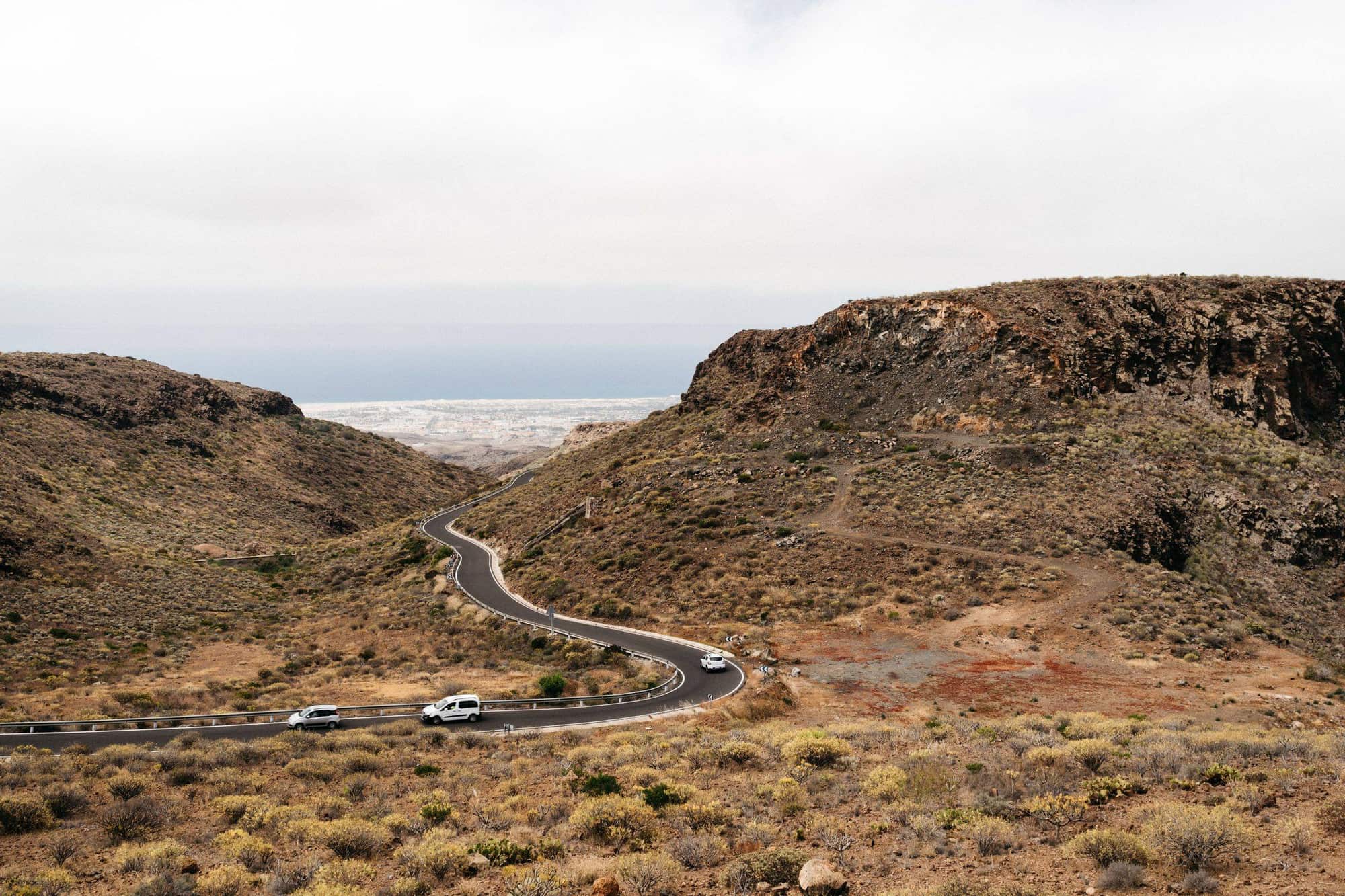 Tenerife South airport, 51 min
Forty-four kilometres, nearly all motorway once you are up the hill and onto the TF-1. The furthest airport run of any resort with a pickup point, so leave a margin on the way home rather than discovering it on the day.
05 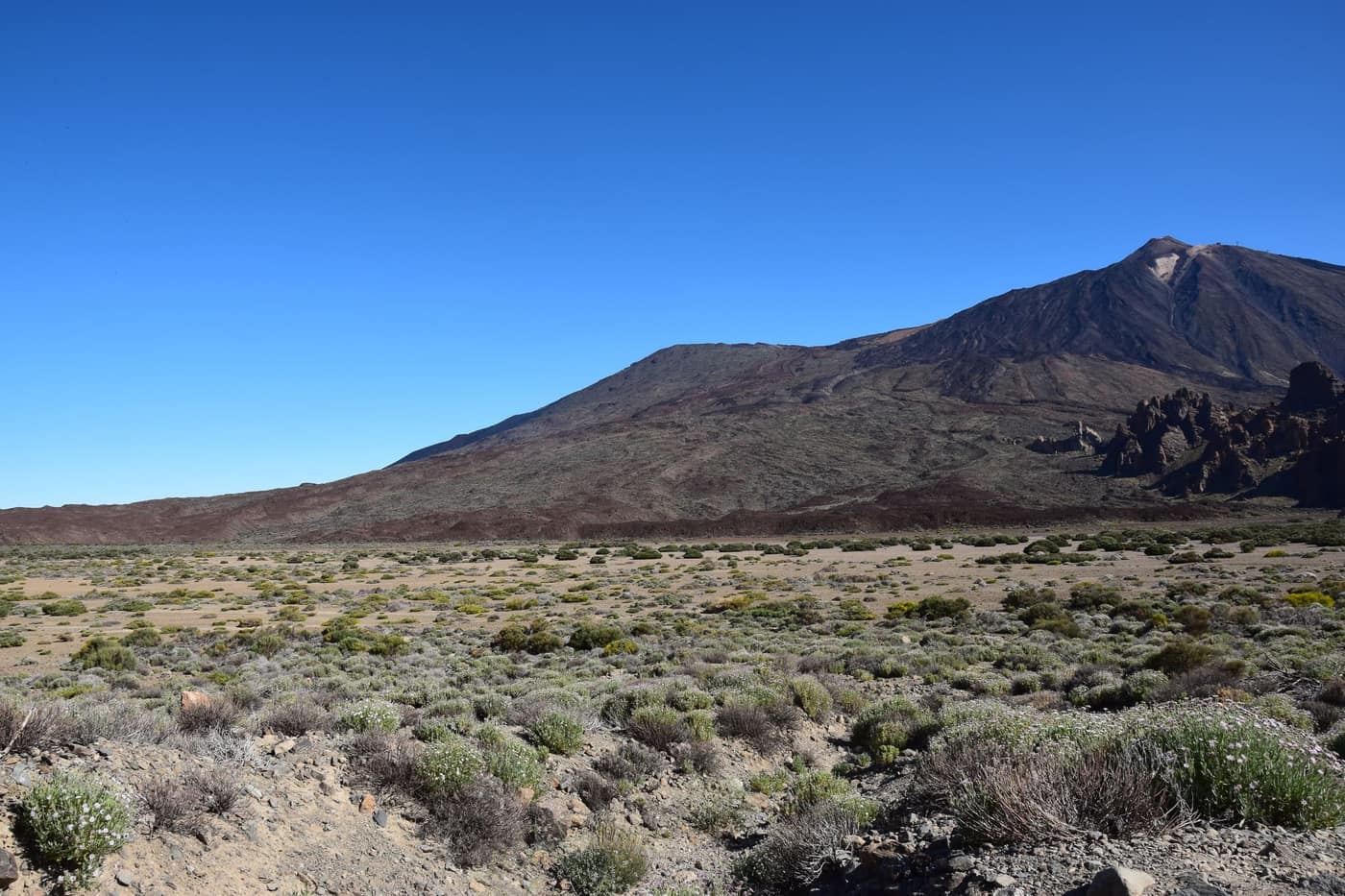 Teide crater, 54 min
Forty-seven kilometres inland, climbing past two thousand metres on the drive to the crater floor. Up there it averages about eleven degrees colder than the coast across the year, so take a jacket, and use a low gear on the way down.
06 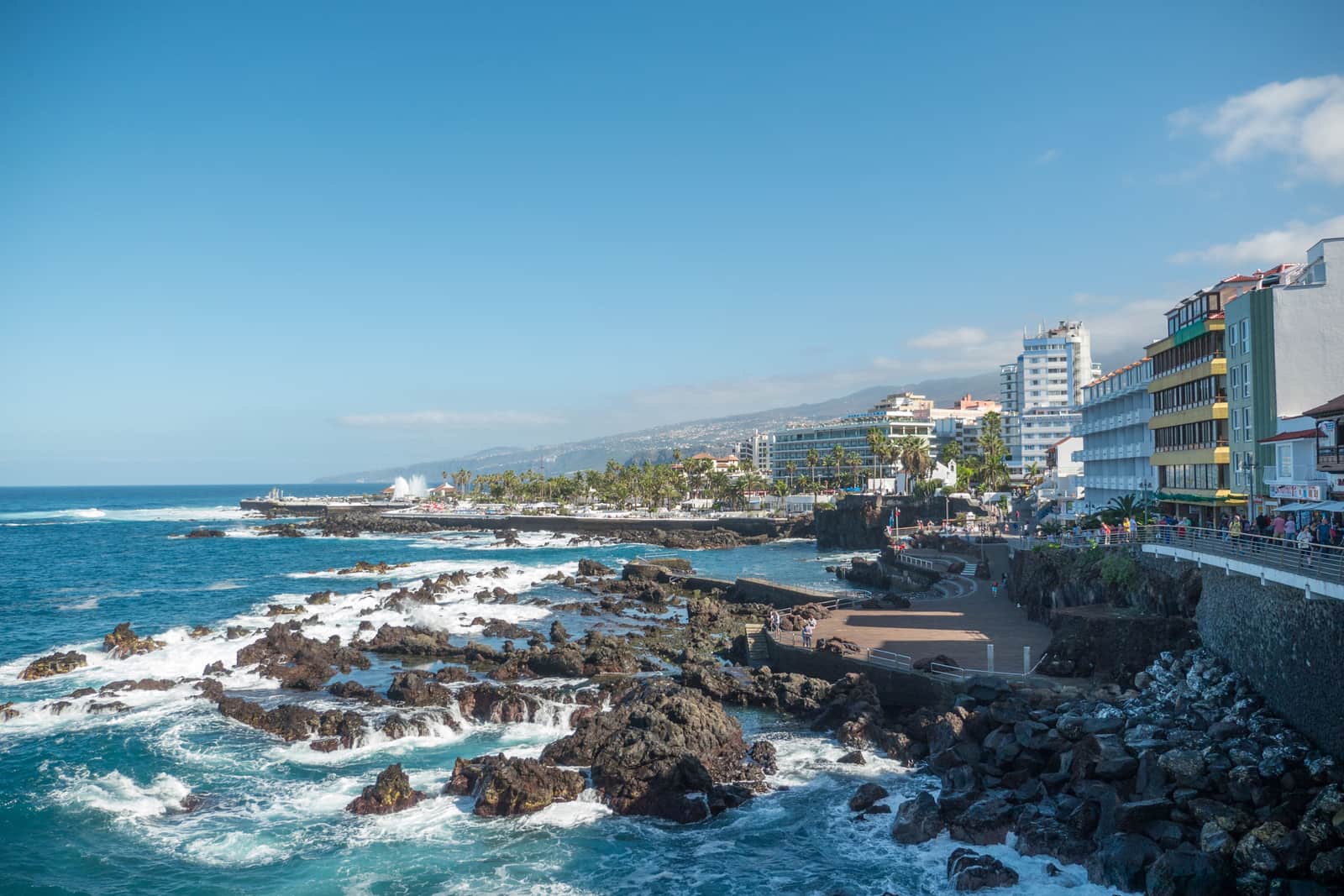 Puerto de la Cruz, 64 min
Fifty-nine kilometres to the north coast. A full day out rather than an afternoon, and best started early.
These times are without traffic, so a real journey takes that long or longer, never shorter. Santa Cruz is the outlier at 75 minutes and 102 kilometres, which is the price of being at the far end of the network. Everything on the west side is close: the big resorts of Costa Adeje are under half an hour back down the coast, and the drive to the crater floor takes under an hour.
The cover, and where it is worth buying
What standard cover leaves out →Every car rental here comes insured as standard, and the level of cover is something you choose during booking rather than argue about at the end. That choice matters more from Los Gigantes than from a flat resort. Standard cover excludes the wheels, the underside, the windscreen and the interior, and those four are exactly what a walled hairpin, a kerb or a loose stone on the old west coast road reaches first. If Masca and the climb out of the town are on your week, the arithmetic usually favours reducing the excess when you book. If the week is mostly the motorway down to the resorts, it matters far less. Either way the cover levels are shown on the car before you commit.
Ready when you are
All pickup pointsPick your dates and the widget opens on the Los Gigantes pickup point, with the airport a click away if you would rather have the car from the moment you land.
Check datesLive prices for your dates. Free cancellation on most cars.
Parking on a slope
Check dates →Park high and walk down. It is the only piece of local advice this town really needs. Los Gigantes steps down to the harbour, and the pressure on the spaces increases the closer you get to the water, which is exactly where everybody tries first. Blue-lined bays are paid, bought from a meter for a limited stay; unmarked white bays are free. The free ones are up the hill, five minutes of walking away, and they are still there in the middle of the afternoon.
The gradient makes two other things worth saying plainly. A handbrake on a steep slope wants using properly, in gear and wheels turned in; and a compact car is far easier to place in a short bay on a hill than an estate or a seven-seater. If your apartment offers a space, ask whether it is on the flat, because plenty of them are not. Parking tickets, like speeding fines, are the driver's to pay and reach you later through the supplier.
Worth knowing before you book
Check dates →01 Everything is on a hill
The town steps down to the harbour and the streets are steep and narrow in places. Parking exists but it is tighter than the purpose-built resorts, and a compact car is easier to live with.
02 The road out is the good part
The TF-454 up to Santiago del Teide and the old road over to Masca are among the best drives on the island, and both start here. Narrow, walled, and worth taking slowly.
03 Mind what the cover excludes
Wheels, underside, windscreen and interior are outside standard cover, and the roads immediately above this town are exactly where that matters most. It is worth what the policy actually pays for before you pick the car rather than after. Hire cars are for paved public roads only, so the tracks into Teno stay off the plan whatever the map app suggests; the sealed roads up there are the good ones anyway.
04 The card is what turns people away
Bring the licence itself, as a card: photographs and digital licences are not accepted, and neither is a copy. Bring a physical credit card in the main driver's name with raised numbers for the deposit hold. Some suppliers take a debit card instead, also physical and in the same name, and your voucher is the thing that tells you which.
05 Fuel, fines and the long run home
Return the fuel at the level you were given; nobody pays you for bringing it back fuller. Fill up on the motorway rather than in the town, where the choice is thin. Fines and parking are the driver's, and if the car is going back at the other airport or up north, returning it in the north is priced into the booking rather than argued about at the end.
Which car suits these roads
See what is available →Small and willing. The roads that make this base worth choosing are the narrow ones over the top, and a compact car is easier on the Masca hairpins, easier in a short bay on a hill, and cheaper to fuel on the long motorway run to the airport. Width is what costs you here, not power: on a single-track road with a wall on one side, fifteen centimetres either side is the whole difference between comfortable and unpleasant.
The exceptions are the usual two. Four adults with luggage climbing to the crater will feel the smallest engines on the way up, so a step up in class is money well spent if the mountain days are the point of the week. And if nobody in the party drives a manual, filter for an automatic for the hairpins from the start: they are a minority of the list here, and on gradients this steep an automatic is much easier to live with.
Frequently asked questions
What the cover leaves out →The questions below are the ones that decide how a week here works: the airport run, the Masca road, the parking on the slope and what you need when you collect. The rental conditions themselves are written out in full on the terms page.
How far is Los Gigantes from the airport?
Fifty-one minutes from Tenerife South, nearly all of it motorway until the last stretch down into the town. It is the furthest of the main resorts from the terminal, which is part of why it stays quieter, and it is the one airport run on the island where an evening arrival is worth planning around.
Do I need a car if I stay here?
More than anywhere else on this list. The town is small and lovely and you will exhaust it in two days; everything that makes the west coast worth a week is a drive away.
Can I see the cliffs without a boat?
You can see them from the town and from the coast road, and the view from the water is better. Both are worth doing, and the boats leave from the harbour below the town.
Is the Masca road really that bad?
Narrow, and it is the only road in and out of the village. While a fire-risk alert is declared, the TF-436 is under access control from 09:00 to 16:00, and vehicles driven by visitors for purely recreational purposes are refused; the control switches on and off with the risk, so check before setting off, and bus line 355 is the alternative. When the control is not running it is twenty-four minutes from here. Go slowly and pull in before you have to.
Where do I park in the town?
On the street, and it is the steep sort. Blue-lined bays are paid and unmarked white ones are free, the pressure is worst near the harbour, and it eases sharply as you climb. Park high and walk down rather than the other way round, and hire something compact.
Can I add a child seat or a second driver?
Both are added with the booking rather than arranged on the day, which is the right way round: a second driver has to be named to be insured, and child seats are a legal requirement here for anyone under 135 centimetres rather than an optional extra.